Few things ruin a trip faster than a flight cancellation notice at 6 a.m. The good news: in 2026, U.S. travelers have more leverage than most people realize, and the airlines have more legal exposure than they would like you to know about. The trick is knowing what is actually owed, what is negotiable, and how to push past the first polite “no.”
Start with the airline’s contract of carriage — not their app
Every U.S. airline publishes a “contract of carriage” — a legal document that spells out exactly what they owe you when things go wrong. Most travelers never read theirs, and the gate agents count on that. Pull yours up before you book a refundable or non-refundable ticket. The contracts are not identical: some airlines guarantee meals and hotels for any controllable cancellation; others only cover “irregular operations” of a certain length. Knowing the language in advance turns a vague complaint into a specific demand.
If the cancellation is the airline’s fault — mechanical, crew, scheduling — and you are stuck overnight, you are typically entitled to a hotel, meals, and ground transport. If it is weather, the airline is generally off the hook for cash compensation but still owes you a rebooking or refund. The line between “weather” and “they chose not to fly a backup plane” is where most of the money is.
Refund rules changed in 2024 and they still apply in 2026
The Department of Transportation’s 2024 rule on automatic refunds finally took the ambiguity out of cancellations. If your flight is significantly changed or cancelled and you choose not to travel, the airline must refund the full ticket to your original payment method — including government fees and seat-selection charges — within seven business days for credit card purchases and 20 days for other payment types. They also have to proactively offer a refund; you should not have to dig for the form.
The same rule also tightened protections for delayed baggage: if your bag is not returned within 12 hours for domestic flights or 30 hours for international, the carrier must cover reasonable expenses for essentials and refund any checked-bag fee. That money often quietly disappears if you do not ask.
If the airline offers you a credit or voucher instead of a refund, that is a tell that they are trying to keep cash you no longer deserve to hold. Politely decline and request the refund through the DOT’s airline refund dashboard or via the airline’s complaint form. Cite the rule directly. Airline complaint handlers see dozens of these requests a day; the ones that mention the specific DOT rule are the ones that get processed cleanly.
The credit card you booked with matters as much as the airline
Most major travel credit cards come with built-in trip-delay insurance. The threshold is usually a delay of 6+ hours or an overnight stay, and the coverage runs between $500 and $1,000 per ticket for meals, hotels, taxis, and toiletries. The catch is that you must charge the ticket to the card and save every receipt. The good cards also bundle baggage delay insurance, which pays for essentials if your bag shows up three days late.
If the airline refuses to put you in a hotel, the card’s travel insurance often will. File the claim within the card’s window (usually 90 days) and document everything with photos of receipts, boarding passes, and the delay notice. The reimbursement is real money, not a coupon, and it works even when the airline blames weather.
The DOT complaint is not a sticker — it is leverage
Filing a complaint with the DOT takes about four minutes at the airline consumer protection portal. The agency does not fine individual travelers, but the complaint count shows up in the monthly Air Travel Consumer Report that airlines pay very close attention to. A polite, specific complaint citing the exact rule, the flight date, and what was denied is more effective than a frustrated one. Airlines are legally required to respond to every DOT complaint within 30 days.
For delays that cross into chronic scheduling issues — chronically late flights, hidden schedule padding, crew-rest games — the DOT also accepts reports that feed into enforcement actions. A pattern of complaints about the same flight number can move a regulator faster than a single case, which is why even a brief note from you matters.
Third-party bookings: who you booked with decides who pays
If you booked through Expedia, Kiwi, or a similar platform, your refund often has to come through them — and they will point you back at the airline. This is where most travelers give up. Do not. Ask the platform in writing for a refund under the DOT rule. If they stall, contact the airline with the same booking reference and request the refund be issued directly. The airline would rather process one refund than deal with the platform’s escalation.
Travel insurance sold at booking is rarely worth the price for routine delays, but check whether yours includes “cancel for any reason” coverage. If so, that pays out 50–75% of the trip cost even when the airline blames weather. Read the policy — not the marketing page — before you assume you are covered.
Realistic compensation for delays within the U.S.
U.S. law does not currently mandate EU-style cash compensation of $250–$600 for short-haul delays. The protections that do exist are mostly reimbursement-based, not punitive. If a third party offers you a guaranteed cash payout regardless of cause, read the fine print — most of those products are reinsurance arrangements that exclude the exact scenarios that actually happen.
Your real win in the U.S. system is the refund of the ticket itself, plus reimbursement of out-of-pocket expenses through credit card insurance. Stack them: refund the ticket under federal rules, claim trip-delay benefits through your card, and keep every receipt. Travelers who do this routinely recover $400–$1,200 per disrupted trip, which is more than most “delay insurance” products ever pay out. And do not forget the card angle: if the airline refund pushes your year-end spending below a card’s bonus threshold, call the issuer and ask for a courtesy waiver. Most major issuers will grant one in writing if you mention the disruption.
A short script that works
Email the airline’s customer service with the booking reference, the original flight number, the new flight number or cancellation status, and three sentences: “This flight was significantly changed. Under the DOT’s automatic refund rule, I am requesting a full refund to my original payment method. Please confirm in writing within seven business days.” If the response is a voucher, reply with the same paragraph plus “I am declining the voucher and re-requesting the refund under the DOT rule.” Keep the tone matter-of-fact. The case resolves faster that way.
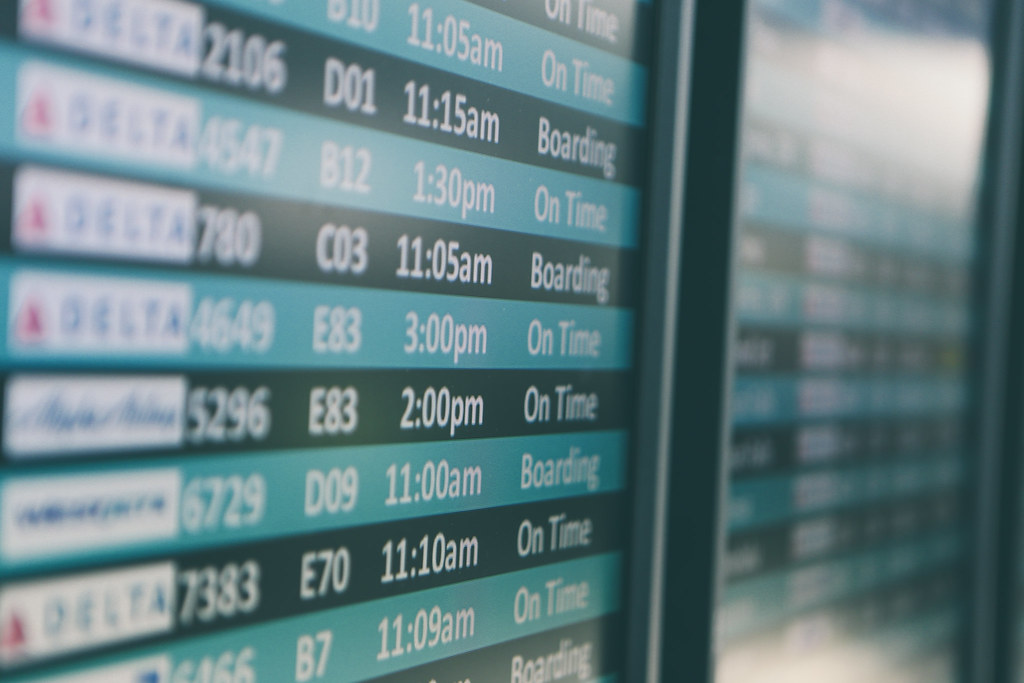
Featured image: TWA Flight Center interior departures board, Wikimedia Commons, CC0.