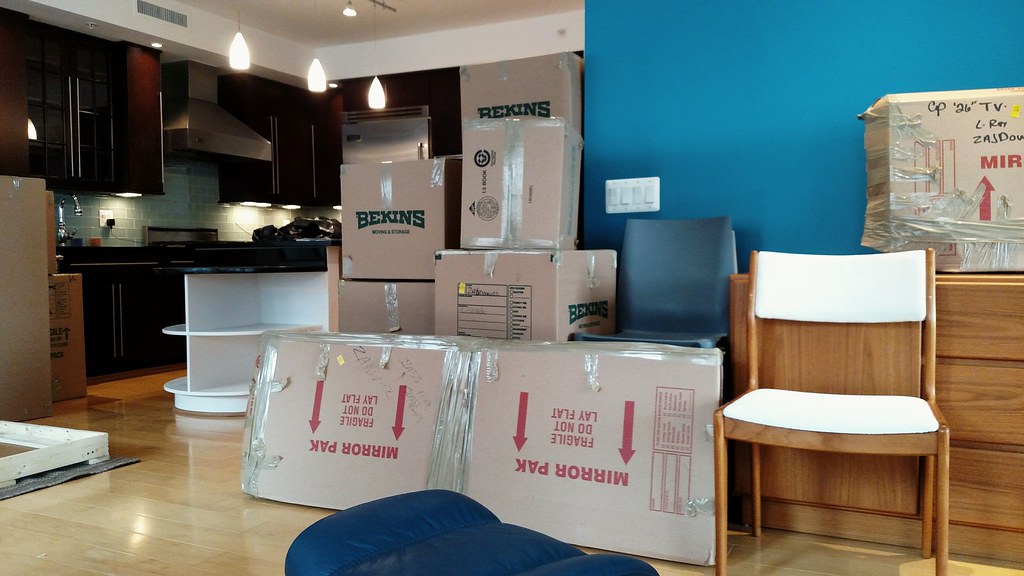
Why the number the salesperson tells you is not the number you’ll pay
Most people treat a moving estimate like an Amazon price tag: a fixed number. It isn’t. Movers and truck-rental companies use a wide variety of line items that don’t appear until the truck arrives, the meter starts, or the form is filled in at the counter. People who budget for the quoted price routinely get hit with a bill that is 20 to 40 percent higher.
The good news: almost every line item is negotiable, avoidable, or both. You just have to know they exist before you sign anything.
The three honest ways to move a household, with real 2026 costs
For a 2-bedroom apartment or small house moving roughly 800 to 1,200 miles, you have three legitimate options in 2026:
- Full-service van line (United, Atlas, Mayflower and similar): $4,500–$9,000 for an 800-mile move; $7,000–$14,000 for 1,200 miles. You pay for packing, loading, transport, unloading, and basic valuation coverage. Convenient, expensive, and the price inflates fast with stairs, long walks, and bulky items.
- Self-pack, full-service transport (a regional carrier that ships a consolidated truck): $2,500–$5,500. You pack and unpack; they drive. Often the best value if you can lift a box.
- Truck rental (Penske, Budget, U-Haul) plus DIY: $1,800–$3,500 for the truck, fuel, mileage, and protective gear. Add $300–$700 for packing supplies, dollies, and mattress bags. Cheapest up front, hardest on your back.
Containers and peer-to-peer shipping platforms (PODS, Updater’s uShip, GoShip) sit between options two and three. They’re worth getting a quote for, but expect 30 to 60 days of delivery time and watch for storage fees that activate automatically after the first month.
The line items nobody mentions on the phone
Ask for the line-item total in writing, not the headline number. The line items that show up after the truck rolls include:
- Long-carry fees: if the truck can’t park within about 75 feet of your door (apartment buildings, narrow streets), expect a per-item or per-foot surcharge.
- Stair fees: $50–$150 per flight, per crew. A fourth-floor walk-up with no elevator is a budget killer.
- Shuttle fees: if the street can’t fit a 26-foot truck, the company sends a smaller shuttle to ferry your stuff to the big rig. Several hundred dollars added.
- Packing services: priced by the box, not by the hour. A typical 2-bedroom takes 35 to 60 boxes at $20–$45 each.
- Valuation coverage: the default 60 cents per pound per article is essentially worthless. Full-value protection typically adds 1 to 2 percent of the declared value.
- Fuel surcharge: for full-service moves, this is real and is separate from any truck-rental gas tab.
- Storage-in-transit: if you can’t accept delivery on the agreed date, storage runs $50–$150 per day and snowballs fast.
Get these in writing before you sign. If the salesperson can’t or won’t write them down, that’s a signal to walk away.
When you move matters more than which truck you rent
The biggest controllable variable is timing. Industry data consistently shows the same pattern: moves at the beginning and end of each month, on weekends, and between May and September run 25 to 40 percent more expensive than mid-month, mid-week, off-season moves. Most leases turn over on the first or last day of the month, which means those are exactly the days every mover is booked solid.
If you can flex by a week or two, ask the mover for their “flexible date” rate. A mid-month Tuesday in February can save more than a thousand dollars on a long-distance move.
Booking lead time matters too. Full-service movers often fill their calendars 4 to 8 weeks out, and last-minute bookings pay a premium. Truck rentals are the opposite: book early for the best rates; walk up to the counter and you may pay double.
How to get a real quote from a mover
A binding estimate is the only kind worth taking. A non-binding quote can grow by 10 percent or more on delivery day, and the federal rules for interstate household moves allow it. Here’s what to do:
- Insist on an in-home or virtual video survey. Quotes done over the phone are guesses.
- Show everything: every box, every drawer, every oddly shaped thing in the attic. The single biggest reason quotes balloon is an inaccurate inventory.
- Ask the company for its DOT number and MC number, then verify both at protectyourmove.gov and the FMCSA SAFER system. If they don’t have one, walk away.
- Get three binding estimates from three different companies: ideally one van line, one regional carrier, and one container option.
- Prefer a “not-to-exceed” estimate to a flat binding one. You pay the lower of the actual cost or the estimate, while the mover eats any overrun.
Hidden costs that aren’t on any mover’s quote
The mover isn’t the only bill. Budget for these separately:
- Utility setup and disconnect fees: many providers charge $25–$75 to start or stop service, and require two to four weeks’ notice.
- Security deposits and first/last month’s rent at the new place, often due before move-in.
- Travel costs: gas, tolls, one or two hotel nights for long-distance moves, meals. People forget the meals.
- Pet transport, kennel, or boarding during the move window.
- Address change fees: USPS is free, but updating the DMV, voter registration, and bank records often takes a half-day of admin work or, in some states, a small fee.
- Replacement packaging: the boxes from the grocery store you thought would work won’t survive three days on a truck.
The honest shortcut: hire help for the two hardest days
The most common DIY mistake is underestimating the worst part: loading and unloading. A single bad day of throwing out your back, breaking a TV, or refusing a friend’s third beer and dropping a dresser on a foot is more expensive than the money you saved.
Consider the hybrid: rent a truck and pack it yourself, but hire two laborers through a gig platform or TaskRabbit for a few hours at each end. Typical cost is $80–$150 per mover per hour, and you keep the savings from a self-pack move without wrecking your body.
The cheapest move isn’t the one with the lowest quote. It’s the one where the final bill matches the estimate, nothing breaks, and you don’t end up with a frozen shoulder for three months.
Image credit: “Moving day” by Thad Zajdowicz via Flickr, licensed under CC BY 2.0.