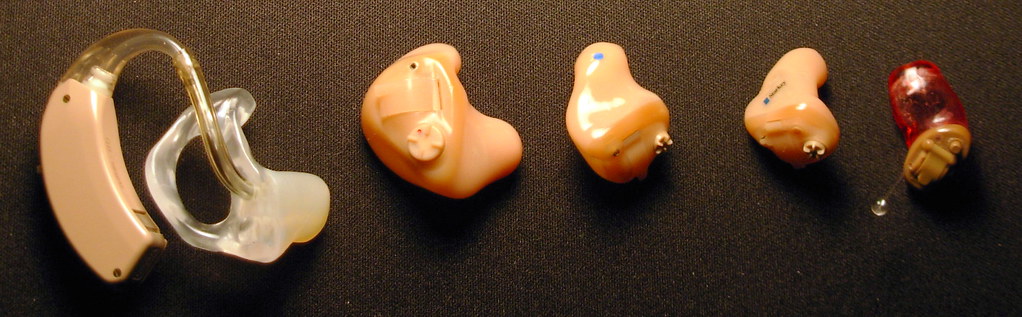
Hearing loss hits about 1 in 8 Americans aged 12 and up, and roughly half of everyone over 60. Yet until late 2022 a pair of prescription hearing aids typically ran $4,000 to $7,000, locked behind a prescription gate. The FDA’s over-the-counter hearing aid rule, fully in force by late 2024, opened a door that most consumers still don’t realize is wide open. In 2026 the gap between a clinic fitting and an OTC pair is often $3,000 or more — but only if you know what to skip, what you actually need, and when “cheap” really is cheap.
Get a baseline audiogram first, even if you plan to buy OTC
An audiogram costs roughly $50 to $150 at most audiologists, and many big-box clinics offer one free as part of a sales appointment. Skip the upsell on that appointment, take your printed audiogram home, and use it to narrow your search before you spend anything on a device.
Two reasons it matters. First, it tells you whether your loss is the kind of straightforward mild-to-moderate dip that OTC devices handle well, or whether one ear is dramatically worse than the other — which is exactly where most off-the-shelf pairs struggle, and where masking one ear with a generic amplifier can actually make the worse ear feel deafer by comparison. Second, audiograms expire. If a year from now you decide a prescription pair really is needed, you’ll be charged again for a re-test, and that second cost is harder to swallow than the first.
What OTC hearing aids can and can’t fix
OTC devices are FDA-cleared for adults 18 and over with perceived mild-to-moderate hearing loss. They are explicitly not for sudden loss, ringing in one ear only, ear pain, drainage, dizziness, or a loss so severe that a loved one can hear a normal-volume conversation across the kitchen before you can hear it across the dinner table. Those are medical red flags that need a real audiologist or an ENT, not a $300 Bluetooth earpiece. Any seller that tries to talk you past them is one to walk out of.
For the usual “I miss the ends of sentences in restaurants and on the phone” loss, OTC pairs work genuinely well. The brands worth comparing in 2026 are Lexie, Jabra Enhance, Sony’s CRE-C20, Eargo, Audien, and Costco’s Kirkland Signature 10.0. Prices range from roughly $200 per ear for commodity Amazon brands (most of which underperform) to about $1,500 per pair for the established players with proper FDA filings and proper return policies.
The marketing math nobody walks you through
Walk into an audiologist and the bundled “pair” includes the device, the fitting, two to four follow-ups, and the warranty. Once unbundled, the device itself is often $1,000 to $1,500 per pair. The rest pays for appointment time, fine-tuning, and the clinic’s overhead. The bundling is exactly what makes the headline number feel so painful.
Medicare does not cover hearing aids. Most private insurers cover nothing or a token annual benefit of $500 to $1,500 every two to three years, often restricted to specific in-network providers. A handful of Medicare Advantage plans offer a richer benefit in 2026 — check yours before you assume you’re paying entirely out of pocket. Either way, HSA and FSA dollars can buy either OTC or prescription pairs, and routing a $1,000 purchase through pre-tax savings puts roughly $250 to $370 back in your pocket depending on your tax bracket.
Specs that matter vs. specs that are noise
The features that genuinely matter on any pair, OTC or prescription: at least six channels of compression, feedback cancellation, multiple listening programs for quiet, noisy, and music environments, telecoil or Bluetooth streaming for phone calls, and a rechargeable lithium-ion battery. Anything above $500 per ear should have all five. If it doesn’t, you’re paying for the brand.
The features to ignore: vague “AI” branding with no published DSP specs behind it, “natural sound” claims you can’t verify, app-locked devices that demand a $10 to $40 monthly subscription just to unlock the volume control you already paid for, and any pair under $150 per ear. The $100 Amazon specials typically fall short of the FDA’s amplification output requirements and frequently worsen hearing in noisy environments by squashing the wide dynamic range that human speech sits inside.
The 45 to 60 day return window is your real-world test
Federal rules require OTC sellers to publish a return policy. The bigger players — Costco, Jabra Enhance, Lexie, Eargo — honor 45 to 60 day money-back windows with no restocking fee. Use that window ruthlessly. Wear the devices in the actual situations you struggle in: a noisy restaurant, your car’s passenger seat during a phone call, a TV session at normal volume, a one-on-one conversation in a quiet room with the radio on in another room. If they don’t help in at least three of those live-fire situations, return them and try another brand.
Prescription pairs come with the same trial period in most states, often 30 days. The catch: many providers charge a “restocking fee” of $200 to $500 if you return, and that line is rarely disclosed upfront. Ask for the written trial terms, including the restocking language, before you sign anything or hand over a credit card.
When to actually see an audiologist anyway
There are four cases where prescription pairs are still the right call: severe or profound loss, single-sided loss, profound tinnitus that OTC devices don’t address, and any loss with a sudden component. In those cases, ask for an unbundled service quote — pay $150 to $300 per appointment for the fitting and follow-ups, get the device recommended and ordered through a known wholesale channel, and skip the bundled package that locks you into a specific brand.
One more insurance trap to watch for: “free hearing aids with insurance” almost always means a specific locked device, often a previous-generation model. Ask what model, what generation, and what the per-device bill would be out-of-network. Compare that figure directly to the OTC list. The “free” pair is rarely free once you factor the limited selection and the bundled appointment fees that come with it, and the “free” device is often two generations behind what you’d buy OTC for the same money.
The short version
Get an audiogram. If your loss is mild-to-moderate and roughly equal in both ears, start at Costco or with a Lexie or Jabra Enhance OTC pair in the $800 to $1,500 per-pair range and use the full return window. Run the receipt through your HSA or FSA. If your loss is asymmetric, severe, sudden, or paired with pain, drainage, or tinnitus, see an audiologist — and ask for an unbundled quote, in writing, before you commit to anything.
Image credit: ikesters via Flickr, CC BY-SA 2.0.