Banks and credit card issuers collected an estimated $8 billion in overdraft fees in 2024, and the Federal Reserve estimates households lose another $6-10 billion annually to late fees, wire transfer surcharges, and similar charges that customers never asked for and never contested. Most of those fees are reversible. Most of them aren’t.
The reason they aren’t reversed is rarely that the institution refuses. It’s that the customer never picks up the phone. Roughly 80% of customers who ask for an overdraft fee refund, according to a 2023 Bankrate survey, get at least one. The script works. The math is on your side. You just have to know which fees are winnable, which aren’t, and how to escalate when the front-line agent says no.
Which fees are usually refundable
You’ll win most refund requests for fees that resulted from a one-time mistake, an unusual month, or a billing system error. Specifically:
- Overdraft fees. The single most contested fee. Banks will refund the first one or two per year, almost without question.
- Late fees on credit cards and loans. Most issuers will waive the first late fee in a 12-month period, especially if autopay failed for technical reasons – declined card, bank outage, or processing delay.
- Annual fees on credit cards. If you call within 30-60 days of being charged, the issuer will often refund it as a “courtesy” – or offer a retention bonus to keep you from canceling.
- Wire transfer fees, expedited payment fees, and stop-payment fees. These are pure revenue for the bank, and the operator has discretionary authority to refund them.
- Mortgage or loan origination fees that weren’t disclosed correctly. If something in the closing disclosure doesn’t match what was promised in the original loan estimate, you can usually get the difference refunded.
Which fees are almost never refundable
Some charges are baked into the cost structure and the front-line agent can’t remove them. Don’t waste a 45-minute call on these:
- Out-of-network ATM surcharges charged by the ATM owner (the operator charges you, not your bank). Your bank may rebate its own fee, but the third-party surcharge is out of reach.
- Foreign transaction fees on a card that has them in the contract you agreed to.
- Returned deposit fees when you deposited a check that actually bounced.
- Early termination fees on closed accounts, especially brokerages or CDs, that you signed up for knowingly.
If your fee falls into the second list, the move is structural: switch products, not argue. If it falls into the first list, here’s what to say.
The 30-second script that works most of the time
Stay calm, be specific, and skip the anger. The agent you’re talking to has the power to refund one fee but not ten, and they get evaluated on call length and resolution – not on whether you win a particular dispute. The call goes fastest when you treat them like an ally rather than an adversary.
A working template you can paste into your notes app before calling:
“Hi, I’m calling about a $35 overdraft fee posted on [date] to my [account/card ending in]. This was unusual for me – my normal balance is around $X, and this happened because [direct deposit was delayed / a check cleared out of order / I miscalculated an autopay date]. I’d like to ask for a one-time courtesy refund. Is that something you can do?”
That’s it. Don’t list every fee you’ve ever paid. Don’t threaten to close the account unless you mean it. Don’t ask for a “permanent” policy change – just a one-time courtesy. The agent can stamp this in under three minutes and move on. Around 80% of well-formed requests succeed on the first call.
When the front-line agent says no
Polite escalation is faster than anger. Say: “I understand. Can you please have a supervisor review the account, or note my dispute so it’s reflected in your records?” Then ask for the supervisor’s name and a reference number. Two things usually happen at this point: either the supervisor approves on the spot, or the supervisor tells you the formal dispute path.
If they still refuse, file a written complaint. This is the move most customers skip. Three regulators accept complaints online and forward them to the institution, which is required to respond within 30 days:
- Consumer Financial Protection Bureau (CFPB) – consumerfinance.gov/complaint – covers banks, credit cards, mortgages, student loans, debt collectors.
- Office of the Comptroller of the Currency (OCC) – for national banks.
- Your state attorney general or state banking department – particularly effective for state-chartered credit unions and regional banks.
Once a regulator complaint is open, the bank has a legal duty to investigate and respond in writing. The fee is usually refunded as part of that response – and the customer often becomes a “do not lose” account for the next year.
Avoid the fees in the first place
Refund requests are reactive. The bigger savings come from setup work you do once and forget. Spend 30 minutes on these settings and you’ll probably never need the script again:
- Turn on low-balance alerts at $50, $100, and $250 thresholds. Most banks offer free SMS or push notifications.
- Set up autopay for the minimum payment on every credit card, even if you pay more manually. Autopay prevents late fees even when you forget.
- Link a backup account for transfers if your checking dips near zero – ideally a savings account at a different bank so a settlement delay doesn’t take both down at once.
- Opt out of overdraft “coverage” entirely. Banks are required to let you do this, and declined-card transactions cost nothing.
- Review your recurring charges quarterly. Subscription creep is a separate problem, but it’s also a fee source that compounds quietly.
The structural move: vote with your money
After two or three successful refund calls, you’ve learned everything the script can teach you. The bigger question is whether your bank is worth staying with. Fee-free online banks, credit unions, and a few of the larger neobanks have made most monthly account fees optional, and overdraft fees on debit cards are now capped at roughly $5 for the largest institutions under recent federal rules.
If your bank still charges you $35 for a one-day overdraft, and your bank isn’t doing anything special for the privilege, the math on staying is bad. Move the direct deposit. Move the autopay. Cancel the card. The refund script is a tool. Use it when you need to. The real win is not needing to.
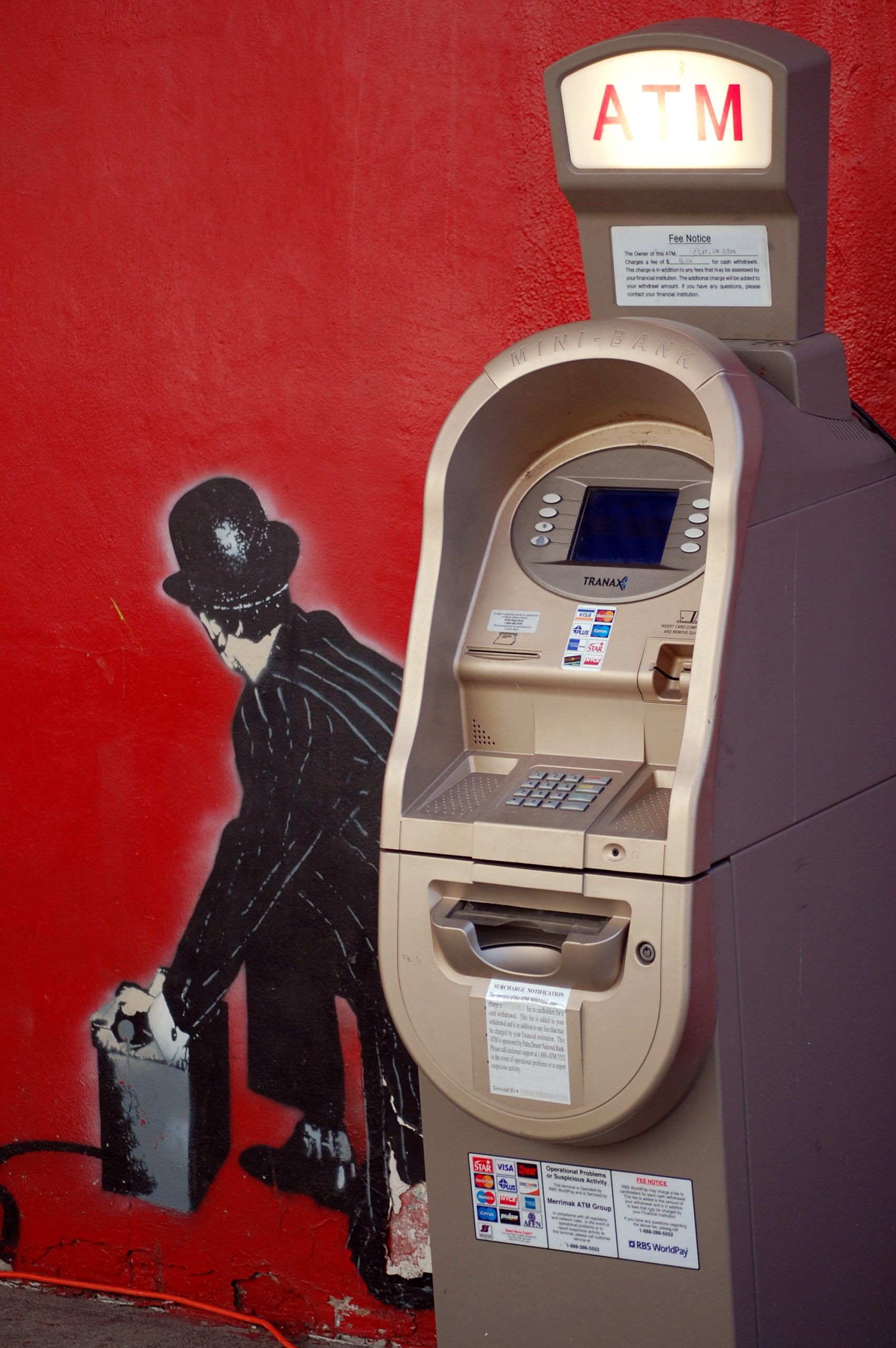
Featured image: “Blow up ATM” by Ludovic Bertron, licensed under CC BY 2.0. Source: Wikimedia Commons.



.jpg)