Walk into a home security sale – whether it is a door-knocker with a tablet, a TV ad for ADT, or a “free system with installation” pitch at the local big-box store – and you will hear a small lie: that the equipment is the expensive part. The equipment is rarely the expensive part. The contract is. And the fees you do not know about until the second police car rolls past your house are.
Here is what the sales pitch does not say, and what actually separates a system that works from one that quietly wastes your money.
The Real Cost of “Free” Equipment
Most professionally installed systems – ADT, Vivint, Brinks, the regional alarm company – quote a low “starting at” monthly fee that assumes you sign a 36 or 60-month contract. The hardware is bundled into that fee, and the monthly number is low precisely because the company expects the contract to run three to five years.
Walk away mid-contract and you owe the remainder. Typical early-termination fees are 75 to 100 percent of the remaining balance, which on a $50-per-month, 60-month contract works out to roughly $1,500 to $3,000. Read the cancellation clause before you sign. Then read it again.
Also bundled in: activation fees ($99 to $299), installation fees ($99 to $499 if not waived), and a service call charge every time a technician has to come out ($75 to $150 per visit). None of these appear in the headline price.
What Burglars Actually Avoid
Criminology researchers have asked burglars what deters them. Three things consistently appear: visible signs someone is home, visible signs of an alarm system (the yard sign and window decals), and a real deadbolt on the door. A loud outdoor siren ranks high. Cameras by themselves, mounted where no one can hear them, rank low.
This matters because most DIY systems – SimpliSafe, Ring, Wyze, Abode – lean heavily on cameras and app alerts. Those are useful for after-the-fact evidence and package-theft deterrence. They are not, on their own, much of a deterrent to someone who has decided to enter the home. A visible yard sign plus a loud indoor siren plus entry sensors on every exterior door is closer to what actually works.
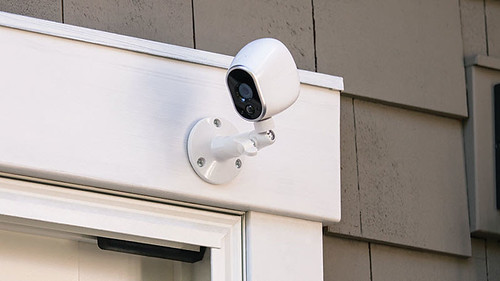
You do not need twenty cameras. You need three or four sensors on doors and ground-floor windows, one visible outdoor camera at the main entry, a yard sign, and a siren.
False Alarm Fees: The Hidden Tax Nobody Mentions
This is the part that blindsides people. Most municipalities charge you when police or fire respond to a false alarm – $25 to $250 for the first one, often escalating with repeat offenses. Some cities revoke your alarm permit after three or four false alarms in a year, which means police will stop responding at all.
How false alarms happen: pets triggering motion sensors, kids arming the system and opening a window, a poorly aimed sensor catching HVAC air movement, a contractor or house cleaner who does not know the code. After two or three of these, you are already out several hundred dollars.
Mitigation is straightforward. Use entry sensors on doors instead of motion sensors in rooms. Pick a system that requires a code to disarm within a short window before it calls the monitoring center. Train every person who enters the home – including the dog walker – on the code and the cancellation window. Add a 30-second entry delay on entry doors so you have time to disarm without panic.
Self-Monitoring Versus Professional Monitoring: The Real Tradeoff
Self-monitoring is free or cheap ($0 to $10 a month) and means you – and only you – get the alert when the alarm goes off. If you are asleep, on a plane, in a meeting, or your phone is on silent, no one calls the police for you.
Professional monitoring ($15 to $60 a month with most modern systems) means a 24/7 dispatcher calls you first, then dispatches police if you do not answer or fail to give the safe word. For people who travel, work long hours, or simply want to stop thinking about whether their phone is charged, this is worth the cost.
SimpliSafe monitoring starts around $22 a month with no contract. Ring is roughly $20. ADT’s installed service is around $45 to $65 a month bundled with the hardware lease. The gap between DIY-with-monitoring and pro-installed-with-contract is mostly paying for the lock-in, not better protection.
The Five Questions That Filter Out Salespeople
Anyone selling you a system should answer these clearly, in writing, before you sign anything:
- What is the total cost over the full contract term, including all fees, assuming I keep the system for the entire term?
- What is the early-termination fee, calculated on today’s date, for this exact contract length?
- What false-alarm fees apply in my city, and what happens to my alarm permit after multiple false alarms?
- Who owns the equipment at the end of the contract, and what happens to monitoring at that point – does the price change?
- What is the price of professional monitoring alone, on a month-to-month basis, with no contract at all?
If the salesperson cannot answer any of these on the spot, walk away. These are not unusual questions. They are the entire contract.
Renters, Homeowners, and Apartments: Different Defaults
If you rent, do not sign a multi-year contract and do not let anyone drill into the structure. SimpliSafe, Ring, Wyze, and Abode all install in under an hour with no holes. Take the sensors and the camera with you when you move.
If you own a single-family home and want hardwired sensors in every window, get a professional assessment and consider a panel like the Qolsys IQ that supports both wired and wireless sensors. You can still self-monitor, but a hardwired panel is harder to defeat and does not depend on forgotten batteries.
If you live in an apartment, a single door sensor, a peephole or doorbell camera, and an indoor siren are usually enough. You probably do not need outdoor cameras and your lease may prohibit them anyway.
The Permit Question Most People Skip
Most cities that charge false-alarm fees also require an alarm permit – usually $25 to $50 per year. If you skip the permit, police may not respond, or you may be fined for running an unregistered system. Check your city’s website before installing anything. The fee is small and the consequence of skipping it is not.
A solid home security setup in 2026 costs less than most people assume and protects them more than the marketing suggests. Pick a system with no long-term contract, two or three entry sensors, one visible outdoor camera, professional monitoring under $25 a month, and the permit paid up. That covers most break-ins, avoids the surprise fees that wreck budgets, and lets you leave in two years if you want to.