The checking account nobody warns you about
“Free checking” used to mean what it said: no monthly charge, no minimum balance, no asterisks. In 2026 most accounts still advertise that way, but the fine print has gotten longer. The bank may not charge you to keep the account open, but it will absolutely charge you to use it badly — and the definition of “badly” has expanded to cover everyday behavior most people assume is normal.
Choosing a checking account used to be a five-minute decision. Now it is worth a real comparison, because the wrong account can quietly cost a family several hundred dollars a year in fees that have nothing to do with interest rates.
What “free” actually costs in 2026
Most major banks still waive the monthly fee when you meet a direct deposit minimum, keep a balance above a threshold, or sign up for paperless statements. Read the waiver conditions before you open anything. A “free” account that becomes $14.95 a month the first month you change jobs or get paid by check can run about $180 a year for a fee with no real service behind it.
The fees that survive are the ones the bank knows you will occasionally trip on: out-of-network ATM surcharges ($3 to $5 each, plus a $2 to $3 charge from your own bank on top), outgoing wires ($15 to $30), cashier’s checks ($8 to $15), paper statements ($2 to $5 a month), and “account inactivity” fees that trigger if you go 90 to 180 days without a transaction.
The classic mistake is ignoring the fee schedule until you have already paid the fee. Pull it up before you open — every bank has one, usually buried under “Help.” Skim the whole thing. The fees you will pay are the ones you would never think to ask about.
The overdraft trap and the new rules
Overdraft is the largest line item on most banks’ deposit-fee revenue. The math has not changed much: $30 to $35 per overdraft, with no cap on how many times it can hit in 24 hours. A bad Tuesday — a coffee charge, an autopay subscription, a tank of gas — can rack up $90 to $140 in fees for what looked like a $40 shortfall.
New rules from the Consumer Financial Protection Bureau require banks to disclose total annual fees clearly and to give you a path to opt out of “Authorize Positive Purge” — the default that lets your debit card go through at $5.99 even when there is no money in the account. Most banks still default it on. The opt-out is a checkbox in your online settings, usually under “Overdraft Protection” or “Debit Card Coverage.” Turn it off.
If you want a buffer without giving up convenience, link your checking account to a savings account as your coverage source. A $200 transfer from savings costs nothing at most banks, versus $35 for an overdraft. Set it up once and forget it. The bank would rather you not know this is the cheaper option.
One last overdraft move: call and ask. Banks refund overdraft fees on first request, often without question, if you have a reasonable history. The script that works is short: “I had an unexpected transaction post and was charged an overdraft fee. I see this was a one-time issue. Can you refund the $35 fee on my account?” Most reps can do this on the spot. It is the easiest $35 you will ever make.
ATM fees, foreign transaction fees, and the math
The dirty secret of ATM fees is that you pay twice — once to the ATM owner and once to your bank. Out-of-network surcharges are typically $3.25 plus your bank’s own $2.50 charge, for $5.75 per withdrawal. Six a month is $34.50 you did not plan to spend.
The fix is not to drive across town to your bank’s branch. It is to use an account that reimburses out-of-network ATM fees, or one tied to a wide fee-free network. Many online banks offer this with unlimited refunds and no monthly fee. Foreign transaction fees on debit cards are usually 3% on every purchase, with no cap. If you travel internationally even occasionally, a debit card that waives them saves real money: a $2,000 trip costs $60 on a card that has them and $0 on one that does not. Most credit unions issue debit cards with no foreign transaction fee. Most big banks do not.
When a credit union or online bank beats a big bank
The case for credit unions has been strong for years: lower fees, better rates on linked savings, less revenue pressure to nickel-and-dime customers. In 2026 it is stronger because credit unions have largely closed the technology gap — most have solid apps, mobile deposit, Zelle, and person-to-person payments that match the big banks.
The case for online banks is straightforward economics. They do not pay for branches, so they pass the difference on through zero monthly fees, higher savings rates, and aggressive ATM fee refunds. The trade-off is no cash deposits, no same-day in-person service, and occasional awkwardness with cash-heavy transactions.
If your banking is 90% digital, an online bank will likely save you $200 to $400 a year and pay you more on savings. If you need to deposit cash regularly or want same-day human service, a credit union gives you that.
How to switch without the drama
Switching banks is easier than it sounds. Open the new account first. Most come with a 60- to 90-day “switch kit” where the new bank contacts your old one, transfers scheduled bill payments, and forwards direct deposits. After two full pay cycles have landed in the new account, close the old one.
During the transition, keep enough in the old account to cover any autopay that has not switched over. Leave it open for at least 30 days after the last expected autopay has cleared. Then close it in branch or by certified letter, and ask for written confirmation that the account is closed with a zero balance. That confirmation is your protection if a stale autopay tries to hit a closed account months later.
The real checklist before you open an account
Before signing up, confirm: no monthly fee, or a waiver you can comfortably meet; no minimum balance above what you would normally keep; no out-of-network ATM fee, or unlimited reimbursements; overdraft opt-off easy to find; no foreign transaction fee on the debit card; savings link for overdraft coverage; mobile deposit; Zelle or equivalent. If a candidate has all eight, it is worth a real choice. If it is missing three or more, the bank is probably making its money on you somewhere.
A checking account is infrastructure. Pick the one that charges you the least for using it as intended, and the rest of your financial life gets easier.
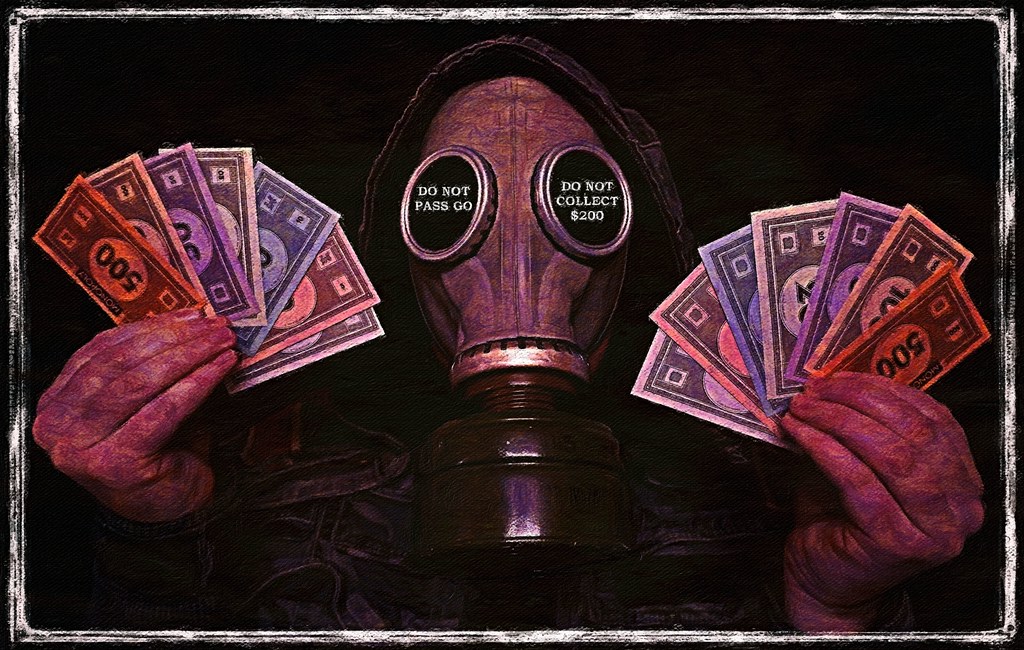
Image credit: “Fiat money” via Flickr, public domain (CC0).