The Call Most Cardholders Never Make
If your credit card APR sits at 22%, 25%, or higher and you have carried a balance for more than one billing cycle, you are leaving real money on the table by not calling your issuer. Issuers raise rates because they can, not because they have to. The Federal Reserve’s January 2025 survey of credit card terms put the average assessed interest rate for accounts that paid interest at roughly 22.5%. Many cardholders accept that as fixed. It is not. The people who call and ask for a reduction, even occasionally, pay materially less than the people who do not. A two-minute phone call can shave three, five, sometimes seven percentage points off your rate, and that compounds into thousands of dollars over the life of a balance.
Step One: Do Your Homework Before You Dial
The retention department (often called “customer retention” or “account services”) handles APR reductions, fee waivers, and payment-plan negotiations. The first agent you reach on the main line usually cannot help you. Politely say, “I’d like to discuss my account, but I want to make sure I’m talking to the right team. Can you transfer me to the department that handles rate reviews or payment plans?” You will usually get there in two transfers.
Before calling, pull three numbers from your account:
- Your current APR and how long it has been at that level
- How long you have been a customer and your payment history (on-time, missed, late)
- A competing offer you actually qualify for — a balance transfer card, a different issuer’s pre-approval, even a personal loan quote. You do not need to use it; you need to mention it
Have a realistic target rate in mind. Cardholders with good payment history can usually push for a rate within 4 to 6 percentage points of the current prime rate. Anything meaningfully above that, and the issuer knows they can charge you more.
The Scripts That Get Real Reductions
Once you reach the right team, skip the small talk and be direct. The script that consistently works goes like this:
“I’m calling because my APR is [X%], and I’ve been a customer for [Y years]. I’ve always paid on time, but I’ve also gotten offers from [Chase / Citi / a balance transfer card] for [lower rate]. I’d rather keep my relationship with you, but I need you to help me do that. What can you do to lower my rate today?”
Then stop talking. The silence is doing work. The agent will usually counter with an offer. If the first number is not where you want it, do not accept immediately. Counter with: “That’s better, but I was hoping for something closer to [target]. Can you check again or escalate this to a supervisor?” Most issuers have authority to drop rates by 3 to 5 percentage points; a supervisor can sometimes go further.
Three things to never say: do not threaten to close the account in your opening line (it signals you are bluffing), do not mention hardship unless you actually need hardship assistance, and do not accept the first “no” from the first agent. Ask to escalate.
What to Ask For Beyond the APR
If your APR reduction hits a wall, there are three other moves that save real money and most cardholders never try:
- Annual fee waivers on cards you have held for at least a year. Issuers waive fees constantly; you just have to ask. “I value the card, but I’m reviewing my annual charges this year. Can you waive the fee this year as a courtesy?” works more often than it should.
- Late fee refunds on a first offense. Most issuers will refund one late fee per year as a goodwill gesture. If you were charged $30 or $40, a two-minute call gets it back.
- Payment plan or hardship programs if you are genuinely struggling. These are not the same as APR negotiation. Hardship programs can drop rates to 0% for 6 to 24 months, but they may show on your credit report. Use them only when you need them.
How Often This Actually Works
The data on APR negotiation is mostly anecdotal, but the pattern is consistent: somewhere between 60% and 80% of cardholders who ask get some reduction, with the median reduction landing around 3 to 5 percentage points. Cardholders who mention a competing offer do better than cardholders who do not. Cardholders with multi-year on-time histories do better than cardholders with recent missed payments. Cardholders who call once a year outperform cardholders who call once and never again.
The worst-case scenario is that the agent says no. Your account is not in jeopardy. You have lost nothing. The cost-benefit is so lopsided it is essentially free money if it works, and a five-minute conversation if it does not.
Timing and What to Do After the Call
When you call matters more than most people realize. Avoid Mondays, Fridays, and the days right after a billing cycle closes; the retention team is busiest and least flexible. Midweek, mid-month, mid-afternoon is the sweet spot. Avoid calling right after a missed payment or a returned payment; you have no leverage. Call after a string of on-time payments, ideally after a year or more of clean history.
If the agent agrees to a reduction, ask for two things before you end the call: confirmation that the new rate will appear on your next statement, and confirmation of how long the rate lasts. Some reductions are permanent; some revert after six to twelve billing cycles. Reputable issuers will email or mail confirmation. If yours does not, write down the agent’s name, the date, and the new rate. If the rate reverts silently two cycles later, that note is your evidence when you call back.
When Negotiation Is Not the Right Move
If your balance is small enough that you can pay it off inside six months at any reasonable rate, focus on paying it off rather than negotiating. A 2% rate reduction on a $1,200 balance saves roughly $20 over six months; that is not worth a phone call. If your balance is large enough that the rate genuinely matters, and you can move it to a 0% balance transfer card, that move usually beats APR negotiation. Read the transfer fee math carefully: a 3% fee on a 0% balance for 18 months is almost always cheaper than a 5% APR reduction stretched over the same period.
Negotiation is a tool, not a strategy. Use it when it is the right tool. Use balance transfers or consolidation when those are the right tools. And always, always pay more than the minimum while you have the breathing room to do so.
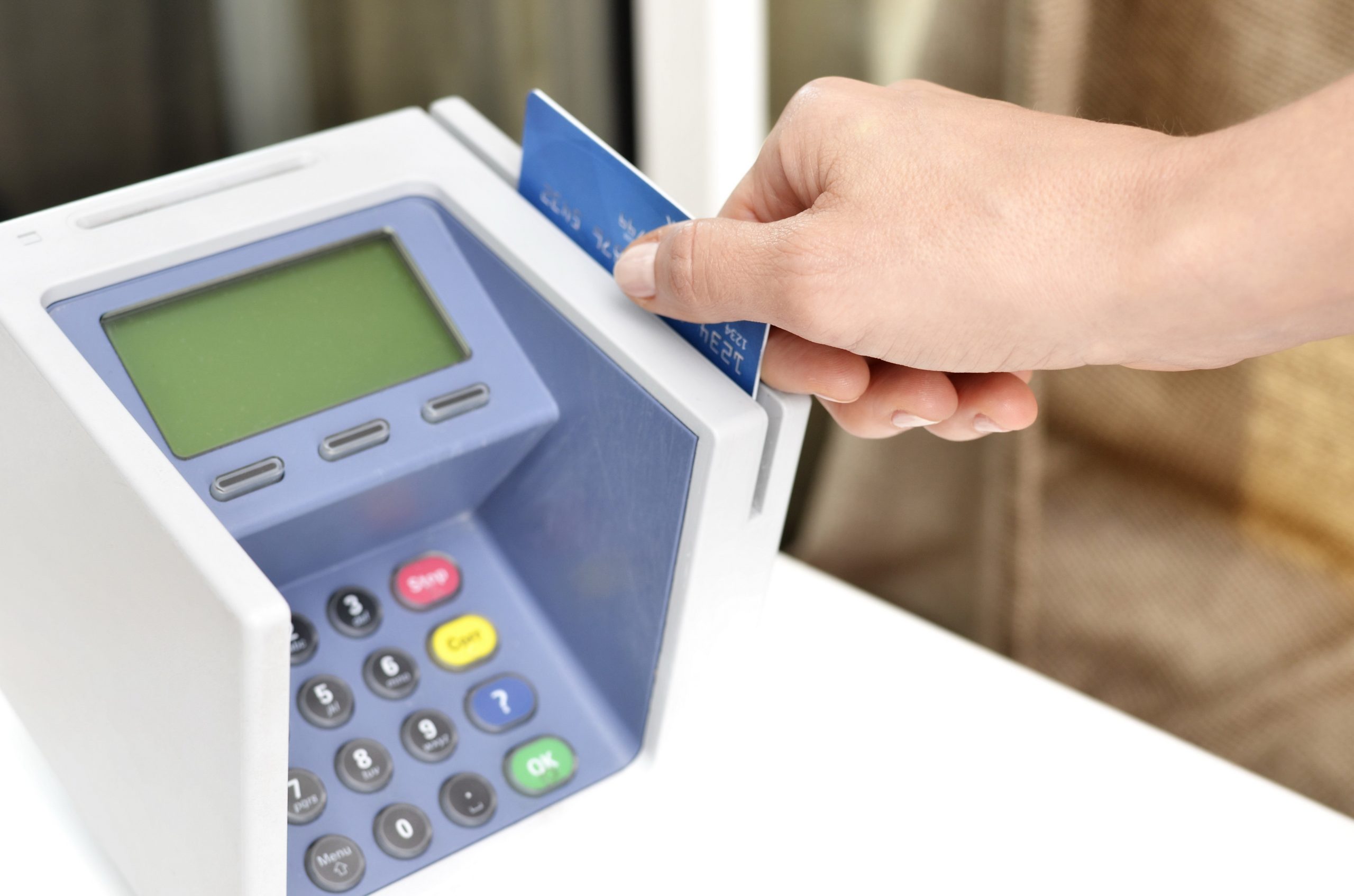
Image credit: “Paying with a Credit Card” by Hloom Templates via Flickr, licensed under CC BY 2.0.