Selling your car yourself instead of trading it in usually puts an extra $1,500 to $3,000 in your pocket, sometimes more on a popular model. It also puts every scam artist, title washer, and bounced-check artist between you and that money. The trade-in desk hides the friction. The private sale makes you run the playbook. Run it badly and you can lose the car, the cash, or both.
Price it like a buyer, not a seller
Most sellers anchor on what they still owe, what they want for the car, or what a neighbor got three years ago. None of those numbers matter. Buyers price by comp, not by story. Pull three things before you set your number:
- Active listings for your exact year, trim, and mileage within 100 miles. This is your real ceiling.
- Sold listings, not asking prices, on the same sources. Sold data is what buyers quietly see on the major listing sites when they click price comparison.
- The trade-in offer from at least two dealers, including the one you would use as a fallback. Write it down so the private buyer cannot pretend they have a competing offer that does not exist.
Set your asking price roughly 5 percent above your real target. Private buyers always negotiate. If you list at the number you actually want, you will talk yourself down below it. If you list 8 percent above, you will sit on the car for weeks. Five percent lets the buyer feel like they won something while you actually got what you needed.
Photos and the listing that actually get calls
Bad photos kill good cars. Buyers scroll past muddy, far-away, driveway-angle shots in under a second. Take 12 to 15 photos in the hour after you wash the car, before the pollen and dust settle back in:
- Front three-quarter, rear three-quarter, both sides, at hip height.
- Driver’s seat, dashboard lit up with the engine running so the odometer reads clearly, cargo area, and a straight-down shot of the open hood.
- Any flaw, photographed up close in daylight. The dent you tried to hide is the dent that kills the deal the day before closing.
- The VIN plate on the dashboard and the sticker inside the driver’s door jamb. Buyers ask for these anyway. Putting them in the listing pre-answers the question and filters out tire kickers.
Write the description the way you would write a job listing: factual, specific, and free of adjectives that do not survive a test drive. Single owner, regular oil changes at Jiffy Lube, new tires at 78k, minor curb rash on the rear right wheel. That is a description. Beautiful car, runs great, must see, serious inquiries only is a way to not sell a car.
The phone screen that filters out 80 percent of bad buyers
The single biggest time-saver in a private sale is the ten-minute phone call before anyone visits. Skip it and you will spend your Saturday showing the car to three no-shows, one dreamer with no money, and one person who was never going to buy in the first place. Run through these on the phone.
- What is your timing? Are you shopping this week or just starting to look?
- Have you seen the listing? If they cannot describe the car, they have not.
- How are you planning to pay? Cashier’s check, wire, or financing already approved?
- Is the price in the listing workable for you, or were you hoping to negotiate significantly?
If the answers are vague, reschedule. If they refuse any in-person meeting and want to ship the car sight unseen with payment by Zelle or wire, hang up. That last one is the most common 2026 scam and it costs sellers their cars.
The test drive: where most sellers make expensive mistakes
Handing someone your keys is the moment most sellers freeze. Don’t. Take a photo of their driver’s license before they get in. Confirm their insurance covers a test drive. Insist on riding along, every time, no exceptions. Drive a loop that includes a highway on-ramp, a parking lot for low-speed maneuvers, and a stop sign where they have to brake hard.
Two specific test-drive moves catch problems:
- Have them back into a parking spot and listen for any clunk or knock from the rear. Most suspension and differential issues show up here, not on the highway.
- After the drive, with the engine off, ask them to sit in the car for 60 seconds without talking. If something feels off, that is where buyers catch problems you would otherwise rationalize away.
If the buyer wants to take the car overnight to think about it, the answer is no. Overnight test drives are how cars disappear.
Taking payment without losing the car or the money
Once the buyer says yes, the money question is the only thing that matters. Accept only payment that has cleared your account before you hand over the keys:
- Cash, counted in person at a place where you can step outside, like a bank parking lot during business hours.
- Cashier’s check from a national bank, verified by calling the issuing bank’s number on their official website, not the number printed on the check itself. Counterfeit cashier’s checks are common.
- Bank wire or ACH that has fully posted, not just initiated. A wire receipt is not money in your account.
Personal checks, even from established buyers, are a terrible idea. Zelle, Venmo, PayPal Friends and Family, and crypto are scams in this context, full stop. If the buyer insists on anything other than the three options above, the deal is not real.
Title transfer and the paperwork that protects you
Sign the title exactly as your name appears on it. If you have moved since the title was issued, follow your state’s address-correction procedure first. On the bill of sale, write the sale price, the date, the VIN, the odometer reading, and both signatures in pen. Keep a copy. In most states you also file a release-of-liability or notification-of-sale form with the DMV the same day. That single form is what protects you if the buyer gets a ticket, hits a pedestrian, or totals the car on the way home.
Remove the plates or transfer them correctly. In some states they stay with the car, in others they stay with you. Either way, decide before you meet and do not let the buyer drive away on plates still registered to you.
The private sale is the rare consumer transaction where the buyer’s risk is much higher than the seller’s, and most sellers do not realize how much of that risk they quietly absorb through laziness. Run the playbook and the only thing you give up is a Saturday and the chance to never wash someone else’s coffee out of your cupholder again.
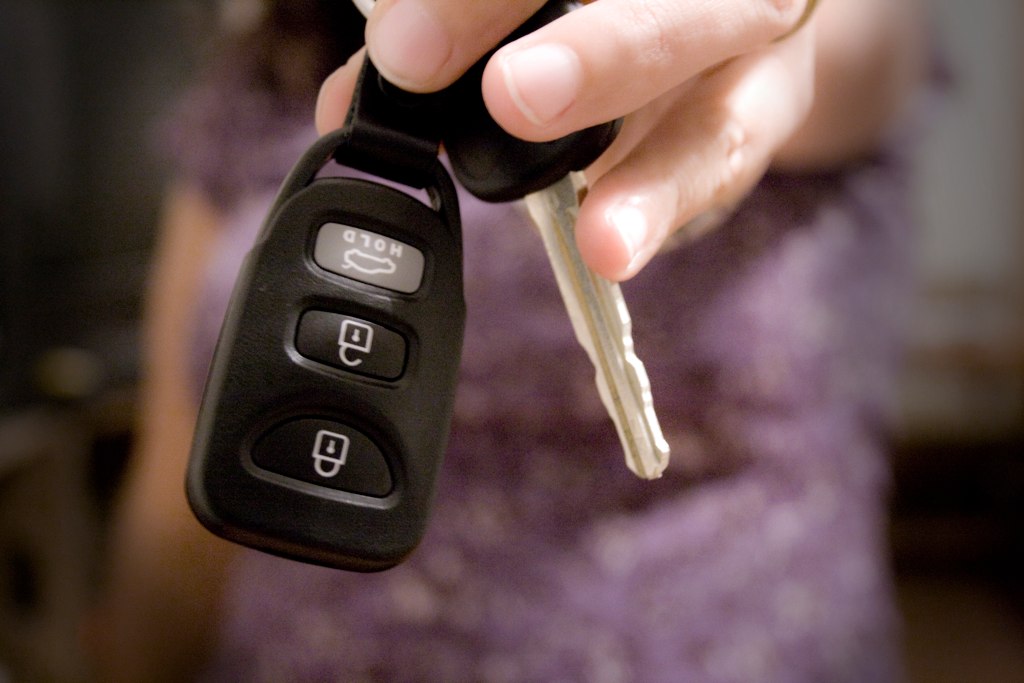
Image: “New Car” by Caitlinator, licensed under CC BY 2.0 via Openverse / Flickr.