The Money Most People Don’t Know They’re Owed
There are real, no-trick dollars sitting in state databases right now with your name on them. U.S. states collectively hold tens of billions of dollars in unclaimed property: dormant bank accounts, uncashed paychecks, forgotten security deposits, refunds, matured savings bonds, even the contents of safe deposit boxes. The National Association of Unclaimed Property Administrators (NAUPA) puts the average successful claim at around $1,800, and roughly 1 in 7 people has money in the system.
That is not clickbait. It is the boring, official record of state governments operating under escheat laws, the legal process by which unclaimed property gets turned over to the state. The hard part is not that the money exists. It is knowing which program to trust, how to search without getting scammed, and how to actually collect when you find something.
Step 1: Search the Official State Databases First
The legitimate starting point is missingmoney.com, the official multi-state search tool that NAUPA runs in partnership with participating states. It is free, requires no signup, and searches records held by the state treasury or its equivalent. Type your legal name, your maiden name if applicable, and any previous addresses where you lived or worked.
You will often see a result for something you forgot: an old utility deposit from an apartment you left in 2009, a final paycheck from a job you left without collecting, a rebate check that went stale and was forwarded to the state instead of being voided.
Search every state you have ever lived in
Property is held by the state where the company that owed it was located, not necessarily the state you currently live in. If you ever lived in, or worked remotely for a company based in, a different state, search there too. Many adults have forgotten accounts in three or four different states by the time they reach their 40s.
Step 2: Check the Right Federal Programs Separately
State databases do not cover everything. A few federal pools of money live outside the state system:
- Unclaimed federal tax refunds. If you did not file a return for a given year, the IRS may still owe you a refund. After three years of no return, that money is supposed to be escheated, but it does not always reach the states cleanly. File the missing return anyway. There is no penalty for filing late if you are owed money, and you have up to three years to claim a refund before it becomes the Treasury’s money permanently.
- Forgotten U.S. savings bonds. The Treasury Department’s TreasuryHunt.gov lets you search for matured savings bonds that have stopped earning interest and were reported as no-longer-redeemable at the institution where they were purchased.
- Old employer retirement accounts. The Department of Labor’s National Registry of Unclaimed Retirement Benefits helps locate 401(k) balances from former employers. If a former employer terminated the plan and could not find you, your money may still be recoverable, usually through the Pension Benefit Guaranty Corporation or the plan’s successor.
- HUD refunds. If you had an FHA-insured mortgage on a home you no longer own, you may be owed a refund of part of your upfront mortgage insurance premium. Search HUD’s refund lookup tool.
Step 3: Avoid the Lookalike Scams
The single biggest mistake people make is paying a “finder” service to do the search. The state databases are already free. If you find a website asking for an upfront fee to “recover” unclaimed money, it is a scam. Legitimate state-run searches never charge you to file a claim.
Watch for these red flags:
- Any site demanding payment before revealing what they found. Real search results show the property and holder names for free.
- Sites that look almost-but-not-quite like a state site. The official domains end in .gov, and NAUPA’s missingmoney.com is the legitimate aggregator.
- Caller ID showing a “state treasury” phone number demanding your bank details to “release funds.” No government agency cold-calls you about money. They mail you a letter.
- Anyone asking you to pay taxes or fees in advance to claim property. States deduct any fees from the property itself or pay the holder company separately. You do not pay to receive.
Step 4: File the Claim Properly
Once you find a legitimate match, the claim process is paperwork-heavy but not difficult. Most states let you file online in 15 to 30 minutes. You will typically need:
- Government-issued ID (driver’s license or passport)
- Proof of your connection to the property: a former address, a W-2 from the employer that issued the check, a lease showing the deposit amount, and similar records
- Social Security number, which the state uses to confirm identity
- A bank account or current mailing address for the payout
Expect the payout to take four to twelve weeks. Some states send a physical check, others do ACH. There is no expedited option, and anyone offering one is selling you something you do not need.
Do not ignore small amounts
A fourteen-dollar forgotten utility deposit is worth claiming. It is free, takes ten minutes, and the state never charges you to send it. Multiply that across five or ten forgotten accounts over a lifetime and you have covered a utility bill or two.
Step 5: Understand the Tax Side
Unclaimed property is not income in the usual sense, but the IRS does treat interest earned on dormant bank accounts as taxable in the year the property is reported to the state. If you claim $4,000 from a 1998 savings account that had been earning 4 percent interest for a decade, the bank already reported that interest to the IRS each year it was active. The state payment itself is not new income, but if the state mails you a 1099-INT for any interest paid in the year of the escheatment, include it on your return.
The Bottom Line
Searching for unclaimed money takes twenty minutes and might return nothing, or it might return enough to cover a car repair. The only real cost is the half hour of your time, and the only real risk is mistaking a scam site for the real thing. Start at missingmoney.com, search every state you have lived in, check the federal programs for old refunds and forgotten bonds, and ignore any “recovery service” that asks for a fee. Most of the money is small, but small money claimed correctly is money you did not have yesterday.
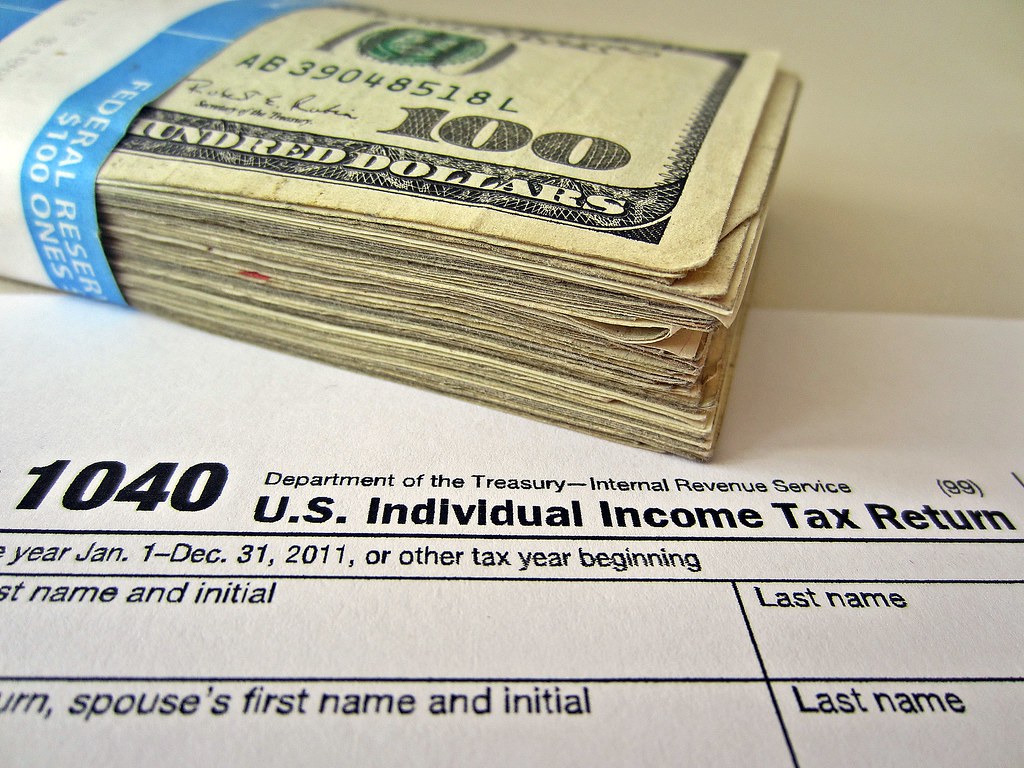
Featured image: “Money and Tax Return” by 401(K) 2013, used under CC BY-SA 2.0 via Flickr.