Why your water bill is not what you think
If your water and sewer bill landed at $87 last month and $141 this month for what feels like the same household, something other than your behavior is going on. Most residential water bills are split into three or four separate charges that the utility has zero interest in explaining on a single readable line. Add to that a sewer charge that is almost always a percentage of your water usage (not a measurement of what actually goes down the drain), and your bill becomes a story told in code.
Across most U.S. cities in 2026, the average household pays somewhere between $40 and $110 a month for combined water and sewer service, with serious regional spread: Phoenix and Atlanta sit near the high end, Portland and the Upper Midwest near the low end. The point is not the average. The point is that two households of the same size in the same ZIP code can pay meaningfully different amounts for essentially the same usage, simply because one knows what the line items are and the other does not.
The fixed charges you pay whether you use water or not
Open any water bill and look for the line that does not change. It is usually labeled “monthly service charge,” “system access fee,” “readiness-to-serve charge,” or simply “fixed.” In many cities this is $10 to $30 a month, and it is non-negotiable, regardless of consumption. You are paying for the meter, the account, the billing, and the right to be connected.
Below that you will usually see a “volume” or “commodity” charge priced per thousand gallons or per hundred cubic feet (CCF). One CCF equals 748 gallons. A family of four typically uses 8 to 12 CCF per month, sometimes more. The variable part is where conservation shows up.
Then comes the part most people miss: the sewer charge. In roughly 70 percent of U.S. municipalities the sewer fee is calculated as a multiplier of your winter water consumption, because the utility assumes your indoor water use is a stable proxy for what you send to the treatment system. Outdoor watering in July does not raise your sewer bill on most of those systems, which is one of the few quirks that actually favors the consumer.
Finally, look for a “capital improvement” or “infrastructure” surcharge, a stormwater fee, a fire service fee, or a separate trash line that has been bundled in. These can quietly add $5 to $25. None of these are tricks, but none of them are obvious unless you ask for an itemized version of the bill.
The two silent leaks that cost the most
The single most expensive problem on most residential water bills is a leak nobody can hear. Two tests catch almost all of them.
The toilet test. Drop a few drops of food coloring into each toilet’s reservoir (the tank behind the bowl), do not flush, and wait fifteen minutes. If color appears in the bowl, the flapper is leaking. A bad flapper can waste 200 gallons a day, which at typical rates is $5 to $15 a month per toilet, year after year. A replacement flapper costs about $8 and takes ten minutes.
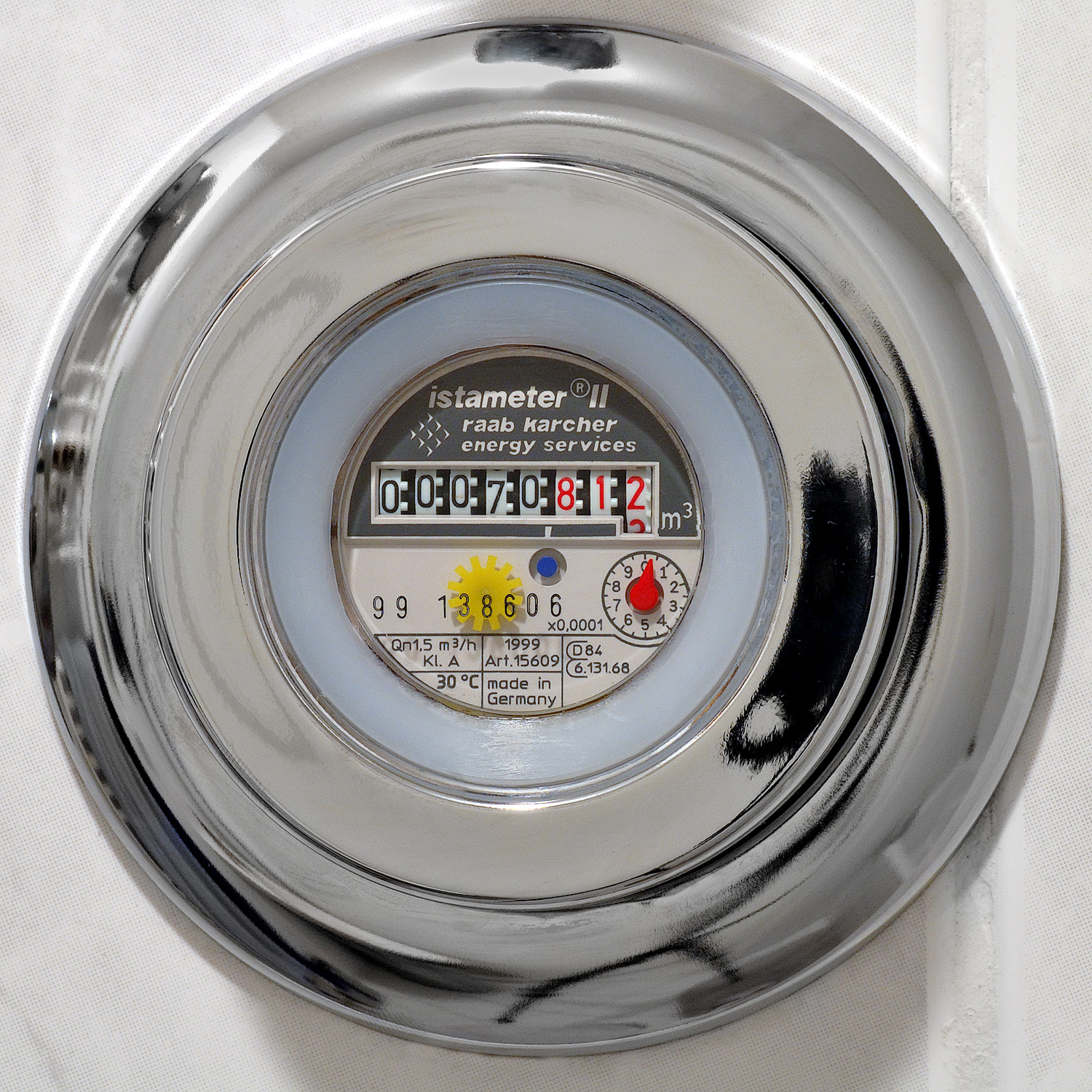
The meter test. Turn off every fixture and appliance that uses water in the house, including ice makers and irrigation. Walk to the meter. If the small triangle or star-shaped indicator on the meter face is still spinning, water is moving somewhere you are not authorizing. In that case, the leak is either on the customer side of the meter (your pipes, your toilets, your irrigation) or on the utility side (their service line). Many utilities will not charge you for leaks on their side once you report it.
The rebates and bill adjustments most people never claim
Most water utilities now run conservation rebate programs that go under-enrolled because nobody tells customers about them. Common ones in 2026:
- Toilet rebate. Many older toilets use 3.5 to 7 gallons per flush. Replacing with a WaterSense-certified 1.28 GPF game or dual-flush model can earn a $50 to $150 rebate from the utility, plus reduce consumption by 20 to 40 percent.
- Smart irrigation controller rebate. Weather-based controllers typically cut outdoor water use by 30 to 50 percent. Rebates range from $75 to $300.
- Rain sensor / shutoff device rebate. Often $25 to $75, instantly installed.
- High-efficiency washer rebate. Less common, but real in some service areas. Worth a quick check.
- Leak adjustment. If you find a leak and repair it within a window (sometimes 60 days), many utilities will adjust the bill to remove the leaked volume from the sewer calculation. You usually have to ask, send the repair receipt, and fill out a form.
Your state drinking water program (search “[your state] drinking water program”) and your utility’s website are the two places to look. State programs also list income-based assistance for water bills that rarely appear on the bill itself.
When the bill is just wrong
There are three common billing errors. First, an estimated read that never gets corrected: if your usage looks identical month after month, you may have an estimate read and not a real one, which means the real reading is delayed. Request an actual read. Second, a misread digit on the meter, easy to confirm if you take a photo of your meter and compare it to what the bill shows. Third, a tiered rate structure that kicked you into a higher bracket for one unusually high month, sometimes due to a leak. Ask the utility about a “leak adjustment” or “cap” before paying the peak tier.
Customers in most states also have the right to dispute a bill in writing. A short, factual dispute letter (date, account number, the specific charge, the reason, the remedy requested, a deadline of 10 business days) is the most effective move. Most utilities will pause collections once a written dispute is on the books.
The moves that compound for years
Lowering a water bill is less about one big habit change and more about a handful of small fixes that compound for years. Replace the flappers. Install two high-efficiency showerheads ($15 each, no plumber). Run the dishwasher only when full. Wash clothes in cold. Fix the irrigation schedule so it runs before dawn, not during peak hours when evaporation is highest and water pressure is lower. Capture the rebates when you replace big fixtures, because the rebate often pays for a quarter of the upgrade.
None of this is glamorous. None of it produces a viral before-and-after photo. What it produces, quietly and for decades, is a water bill that does not surprise you, and a household that performs something that on most bills is a perfectly predictable expense.
Photo credit: André Karwath aka Aka, via Wikimedia Commons, licensed CC BY-SA 2.0.