Why Your Mailbox Is Now a Financial Risk
Mail theft is up sharply across the United States, and the stolen envelopes almost always contain paper checks. Thieves “wash” the checks with household chemicals, erase the payee and amount, rewrite them to themselves, and cash them at a branch or via mobile deposit within hours. Once a check leaves your mailbox, the bank treats it like any other item drawn on your account, and reversing the loss is harder than people expect.
If you still write rent checks, pay contractors, send tuition, mail birthday cards with gift checks, or hand your bookkeeper a stack of bills, you are exposed. Here is what actually protects you, what your bank is required to do, and the moves that put real money back in your account if the worst occurs.
Stop Putting Checks in Unlocked Mailboxes
The single cheapest protection is a locking mailbox. Thefts cluster around curbside boxes because they are open by design. A locking unit costs $40 to $150 and pays for itself the first time it stops a stolen rent check.
- For outgoing mail, drop it inside the post office or hand it to a letter carrier. Blue collection boxes are still hit regularly, especially in suburban areas.
- For incoming mail, a locking curbside unit or a cluster box from a commercial mailbox provider cuts the risk without changing your address.
- Sign up for Informed Delivery at usps.com. You see a scan of every piece of mail scheduled to reach you that day, so you know within hours if something is missing.
Switch the Payments That Matter to Digital
Not every payment is suitable for a paper check anymore. The high-value, recurring payments – rent, mortgage, utilities, taxes, contractors – should move to a method that cannot be intercepted.
- Bank bill pay through your checking account. The bank prints and mails the check itself, often from a secure facility, and you get a tracking number and confirmation.
- ACH transfers through Zelle, your bank’s transfer system, or directly from the biller’s website. The money moves between banks; there is nothing to wash or alter.
- For one-off large payments, a cashier’s check mailed from the bank’s own branch is safer than a personal check mailed from home, because the funds are already debited from the issuer’s account.
Keep checks only for situations where the other side genuinely requires them, like giving a gift to a relative, paying a small vendor who doesn’t accept cards, or sending a deposit refund. When you do mail one, write it in black gel ink (harder to wash), avoid leaving the memo line blank, and photograph both sides.
If a Check Is Stolen or Altered: The First 48 Hours
Speed matters more than anything. Banks have stronger obligations to reimburse you if you report promptly. Sloppy, slow reports are the reason most reimbursement claims fail.
- Call your bank’s fraud line, not the general number. Most banks have a dedicated fraud department reachable through the app. Open a dispute immediately and ask for the claim to be coded as forged or altered check fraud, not just an “unauthorized transaction.”
- Stop payment on any outstanding check the same day if you suspect it is missing. A stop payment costs around $30 at most banks and freezes the specific check number.
- File a report with the USPS Postal Inspection Service at uspis.gov. Mail theft is a federal crime, and the report number strengthens every other claim you make later.
- File an identity theft affidavit with the FTC at IdentityTheft.gov. Even if the thief only has your account and routing number, the affidavit gives you a paper trail that banks and credit bureaus take seriously.
- Request a fraud alert or credit freeze from all three bureaus. With a freeze, no new credit can be opened in your name at all.
The Bank Reimbursement Rule Most People Miss
Under the Uniform Commercial Code, banks generally have to absorb losses on altered and forged checks, but only if the customer did not contribute to it. That last phrase is where claims get denied. If you wrote the check, handed it to the mail, and it got washed and cashed, the bank often has to reimburse you. If, however, you signed a blank check, left the payee line empty, or ignored alerts from the bank about suspicious activity, the bank can shift blame to you.
This is why the strongest reimbursement cases share three traits: the customer reported the loss within one to two business days, the check was clearly made out to a specific payee, and there is no signature or memo line the thief altered. If your claim is denied, escalate to the bank’s regulator. Consumer complaints to the Office of the Comptroller of the Currency (for national banks), the FDIC (for state-chartered banks), or the Federal Reserve produce results that phone calls do not, because the regulator forwards the complaint and the bank has 60 days to respond in writing.
What to Do If Your Identity Is Already in a Thief’s Hands
A stolen check exposes your routing number, account number, name, and address. With that, a thief can attempt ACH debits against you, redirect stimulus or insurance payments, or open new deposit accounts in your name. Treat the breach as if it were a full identity event.
- Close the compromised checking account and open a new one with a new account number. Most banks do this in a single branch visit.
- Order new checks. Do not reuse the old account number even after the bank reopens the same account.
- Watch the new account for 90 days. Set up real-time alerts for any debit, ACH, or check. Free apps like Credit Karma and your bank’s own app will surface new accounts opened in your name.
- File a fraud affidavit with the FTC and keep the case number. It is the single document banks, credit bureaus, and collection agencies accept as proof that an account or inquiry was not yours.
The Two Habits That End the Risk for Good
The households that never deal with check fraud share two routines. First, they treat outgoing payments as a payee, not a chore. Checks get written at the desk, sealed immediately, and walked into the post office. There is no overnight pile on the kitchen counter and no run to the blue box. Second, they review the bank account every few days and set transaction alerts above $1. The faster you catch a problem, the faster the bank has to reimburse. Banks deny reimbursement on checks that bounced through two statement cycles before the customer noticed, and they approve reimbursement on the same problem reported the same week. The whole system rewards people who look at their money, and quietly penalizes those who don’t.
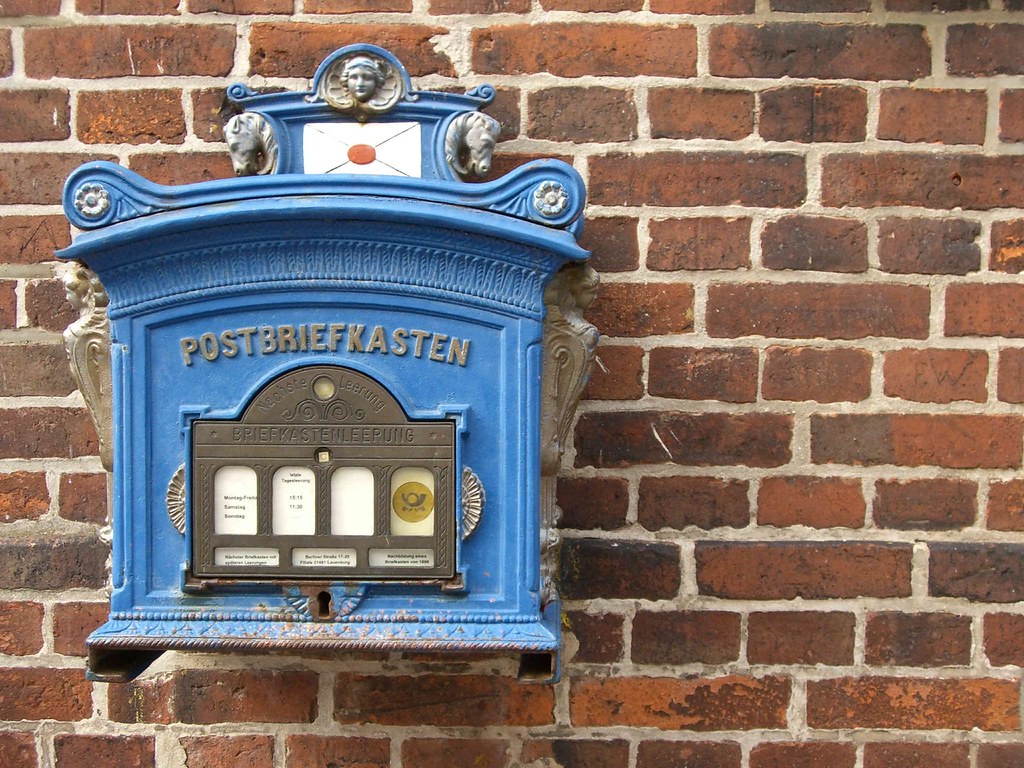
Image: old blue mailbox by Flickr user, via Openverse, CC BY 2.0.