Every week the U.S. Consumer Product Safety Commission posts new recalls. Most people ignore them. The few who actually read them usually have a half-used blender sitting in a cabinet they bought two years ago and never registered. Here is the real, practical playbook for handling a product recall in 2026 — the refund, the replacement, and the question nobody walks you through about whether to bother with the class action settlement.
Step 1: Confirm the recall covers the exact product you own
A recall is not a brand-wide ban. It covers a specific model number, a date range of manufacture, and often a specific serial number range. The fastest way to verify is the database at cpsc.gov/recalls, which offers a free weekly email subscription and a model-by-model search going back decades. For vehicles it is nhtsa.gov/recalls. For food, drugs, cosmetics, and medical devices it is fda.gov/safety/recalls. For meat, poultry, and processed eggs it is fsis.usda.gov/recalls.
Have the model and serial number ready before you search. They are usually on a sticker on the back, bottom, or inside the lid of the item. If you can’t find them, the manufacturer’s customer service line can usually look up your purchase using a loyalty account or a credit card tied to the original transaction.
Step 2: Stop using the product and document everything
The moment you confirm the recall applies, stop using the item unless the notice specifically says it is still safe until the fix. Many recalls are for fire, burn, shock, laceration, or chemical exposure hazards that don’t trigger until the third or fourth use. Photograph the item from a few angles, the model and serial label, the receipt if you still have it, and any visible damage. Save the recall notice as a PDF. These are the documents you will need for the refund, the repair, and any injury claim later.
If you threw the receipt away years ago
You can usually pull the order confirmation from your email, your Amazon or Walmart order history, your credit card statement, or a retailer’s loyalty account. Most manufacturers accept any of those. They will not accept a screenshot from a price-tracking site or a third-party marketplace listing.
Step 3: Pick the right remedy — refund, replacement, or repair
Recalls almost always offer one of three remedies, and the notice will tell you which. Refunds are sent to the original payment method or mailed as a check if the original card is closed. Replacements are issued after the manufacturer confirms the old unit is returned or destroyed; you often have to cut the power cord and send a photo. Repairs are scheduled through an authorized local service center, and the manufacturer covers shipping, parts, and labor.
If you want a refund but the manufacturer only offers a replacement, ask. Most will switch to a cash refund if you push politely, especially if the replacement model is materially worse — smaller, a different feature set, a wrong finish. The notice does not always say you have a right to a cash refund, but manufacturers honor that request more often than they admit because the alternative is a complaint with the CPSC or your state attorney general.
Step 4: The class action question nobody walks you through
Most recalls come paired with a class action settlement. You get a notice, a website, a deadline, and a payout that looks tiny — often five to forty dollars for documented claims and one to ten dollars for everyone else. Here is the honest math on whether to bother:
- If your product actually broke, started a fire, or injured someone: file the claim. Documented claims pay real money and you usually don’t need a lawyer.
- If you bought the product but it didn’t fail: skip it. The payout rarely exceeds the time you spend filling the form, and many settlements require you to mail in the serial number or a photo of the cut cord.
- If the settlement requires you to release all future claims: read the release. Some are narrow and only cover this product. Others block you from suing over future defects you don’t yet know about. If you had a real injury, talk to a products liability attorney before filing — many offer free consultations and work on contingency.
Spot fake recall notices for tax or refund scams
Scammers send fake recall notices by text and email with links to “claim your refund.” The link goes to a fake IRS, CPSC, or manufacturer site that asks for your Social Security number or bank login. Real recalls never ask you to claim anything by clicking a link. If you get an unsolicited recall email, go directly to cpsc.gov to verify it. Don’t click the link.
Step 5: If the product caused damage or injury
Stop using the item and preserve it. Don’t repair it, don’t throw it out, and don’t ship it back yet. Take photographs of the damage, the scene where it happened, and any injury. Get a written incident report from the fire department, the repair technician, or the hospital if one was issued. Then call the manufacturer’s customer service line and report the incident. Most will offer a settlement several times the original purchase price for documented damage, because the alternative is you hiring a lawyer.
If the manufacturer’s response doesn’t reflect what you lost, contact a products liability attorney. Most work on contingency and offer a free evaluation in under thirty minutes. State lemon-law protections and the federal Magnuson-Moss Warranty Act cover more than people realize, especially when the item caused property damage beyond itself. Your homeowner’s or renter’s insurance may also cover the loss, and you can pursue the manufacturer in small claims court without a lawyer if the damage is under the limit.
Step 6: Don’t forget the smaller money back
If you bought it with a credit card, check whether your card has purchase protection or an extended warranty benefit. Many card issuers will refund the purchase price or cover the repair cost on top of the manufacturer’s remedy, and you can stack both. Some retailers will also refund the full purchase price even when the manufacturer only offers a repair, because they want you back in the store.
Recalls are not free money, but they are real money back if you do the five steps above. Confirm the recall covers your product, document the item, pick the remedy that fits your situation, decide whether the class action payout is worth your time, and report any damage to the manufacturer and your insurer. People who skip the process quietly lose thousands of dollars every year to products that were defective from the day they were made — and most of them were never told they could have gotten their money back.
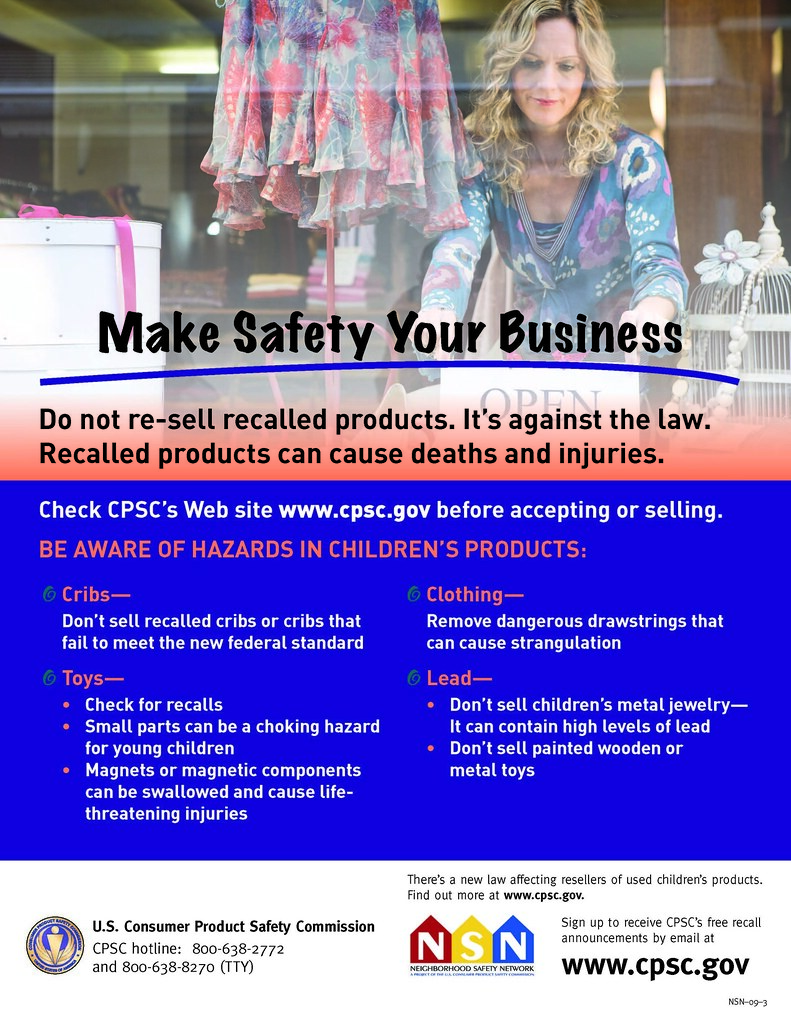
Image: “Resale/Thrift Stores: Make Safety Your Business” by USCPSC, via Openverse, licensed under CC BY 2.0.