The Real Break-Even Math
The number online calculators love to produce is “if you stay X years, buying wins.” That framing is wrong, or at least backwards. The right question is: at what point does the total monthly cost of owning stop being more expensive than renting? Most U.S. buyers cross that line somewhere between five and nine years, and the gap widens with every additional year they stay. Under five years, the math almost always favors renting. Between five and nine, it depends on your local market and what shape the home is in. Past ten, owning nearly always comes out ahead, assuming you did not overpay and the home did not need major repairs in year three.
The simpler shortcut: ignore the sales price entirely. Look only at the monthly cost of owning versus the monthly rent. On the owning side, that means principal, interest, property taxes, homeowners insurance, HOA fees, and a realistic maintenance reserve, usually 1% of the home’s value per year set aside. On the renting side, it means your rent plus renters insurance, typically 15 to 30 dollars a month. If the owning number is twice the rent number, you will need to stay a long time for ownership to pay off. If they are within 20% of each other and you can stay put for seven years, buying usually wins.
What Rent-vs-Buy Calculators Quietly Leave Out
Default rent-vs-buy calculators often assume the home will appreciate at 3% to 5% a year, ignore most maintenance, and treat your down payment as money that just sits there. None of those assumptions are realistic in 2026.
Transaction costs eat 8% to 12% of the home’s value. Real estate commissions, loan origination, title insurance, transfer taxes, inspections, and the eventual selling costs all add up. On a 400,000 dollar home, that is 32,000 to 48,000 dollars you pay once on the way in and once on the way out. A five-year owner loses most of this to friction. A twelve-year owner recovers it.
Maintenance is not optional. First-time buyers regularly underestimate the cost by half. The HVAC system fails on average at year 12 to 15. Roofs last 20 to 25 years. Water heaters, garage doors, and kitchen appliances all have shorter lives. A reasonable maintenance and replacement reserve is 1% of the home’s value per year, more for older homes, less for newer construction. On a 400,000 dollar home, that is 4,000 dollars a year you should be setting aside, not spending. Renters pay nothing for any of this.
Opportunity cost on the down payment is real. Dropping 80,000 dollars into a 20% down payment locks that money into one illiquid asset. A balanced index fund portfolio over the same ten-year window typically returns something close to the after-inflation return on real estate, with far lower friction. The “buying builds equity” argument only beats “investing the difference” when home appreciation meaningfully outpaces the portfolio, which in many U.S. metros right now, it does not.
Tax benefits have shrunk. The SALT cap, currently 10,000 dollars combined state and local tax deduction, means most homeowners cannot fully deduct property taxes anymore. The mortgage interest deduction only helps if you itemize, and the standard deduction is large enough to wipe out the benefit for many households in the first decade of the loan, when interest is the biggest piece of the payment.
The Three Questions That Actually Move the Answer
Forget appreciation forecasts. The three questions that decide this for almost everyone are:
- How long will you actually stay? Be pessimistic. Job changes, relationships, family plans, and fatigue with a house all shorten the typical American stay well below what people assume. If you have moved three times in five years, plan to move again.
- What is the local rent-to-price ratio? In markets where rent is unusually cheap relative to purchase prices, including most of the U.S. South and Midwest right now, buying rarely wins on math. In markets where rent is unusually expensive relative to purchase prices, covering much of California, the Pacific Northwest, and parts of the Northeast, buying wins much faster than the calculators suggest.
- What shape is the house in, and what will it cost? A 1950s ranch that has been lightly updated is a different financial decision than a 1920s craftsman with original plumbing. Get the inspection before you get attached.
When Renting Wins
Renting is the right call if you expect to move in under five years, if you do not have a stable emergency fund beyond the down payment, if maintenance is not something you want to manage, or if your local market has a rent-to-price ratio that screams “this house will not pay for itself.” Renting also makes sense during periods of rapidly rising home prices, where you risk buying at a peak, and during periods of very high mortgage rates, where the financing math alone takes buying off the table for most households.
Renting has one underrated financial advantage: flexibility. You can move in 60 days to chase a job, follow a relationship, downsize after a divorce, or relocate when a neighborhood turns. That flexibility has dollar value, especially in the first ten years of a career when promotions and relocations are most likely.
When Buying Wins
Buying is the right call if you can comfortably stay for ten years or more, if your monthly cost of owning is close to local rent, if you have priced maintenance realistically and have the cash to cover it, and if you want the non-financial parts of ownership: freedom to renovate, no landlord, stable housing costs in retirement, and a forced savings mechanism that many people benefit from.
Buying is also often the right call when interest rates drop meaningfully on a refinance and you already have equity, and when you can house-hack by renting out part of the property, which is one of the few ways to get paid to live somewhere.
What to Do Before You Decide
Run the numbers yourself, on paper, with your actual rent, your actual down payment, your actual property tax rate, and a 1% maintenance line. Then price a realistic seven-year hold, not the worst case and not the optimistic case. Talk to two or three homeowners in the neighborhood about what they have spent on repairs in the last three years. Read the actual HOA documents if there is an HOA, because the rules and dues will shape your life there.
And then step back. The question is not whether buying or renting will make you richer over thirty years. The question is whether the specific house, in the specific neighborhood, with the specific mortgage, fits the specific life you are actually going to live over the next decade. Most calculator headlines bury that question. Most expensive housing decisions come from forgetting to ask it.
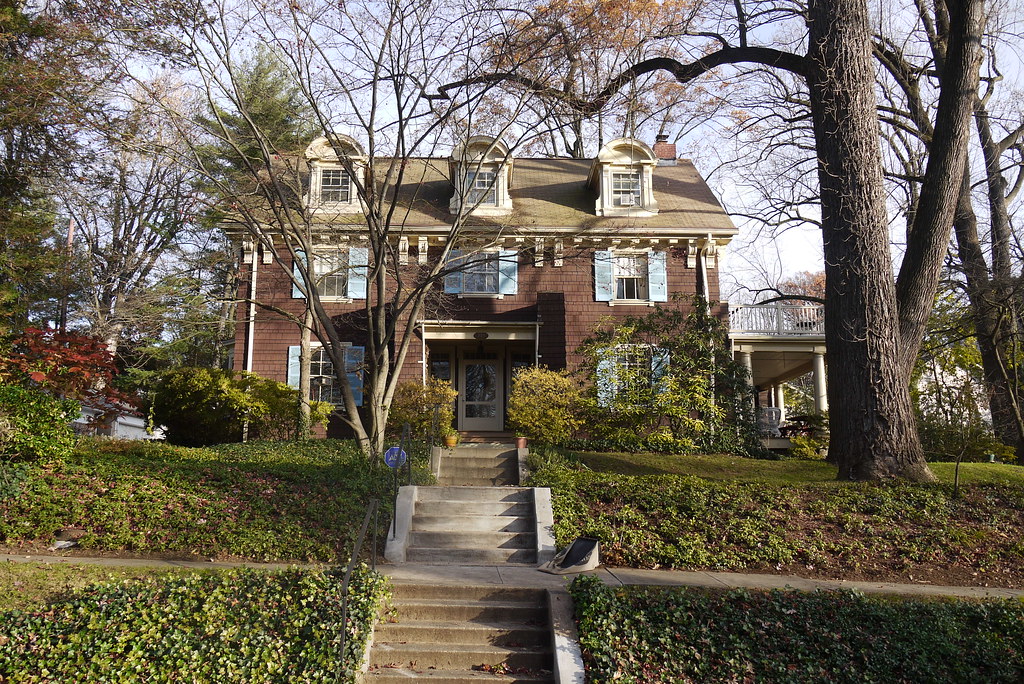
Image: Baltimore Heritage via Flickr, CC0 1.0 (public domain).