The printer is the rare purchase that feels cheap on the shelf and expensive for years. The box is close to a loss leader: printers get cheaper every year while ink and toner get more expensive, and the maker recovers the difference in the consumables. A $60 printer can cost $70 a year to feed. A $400 printer can cost $30.
Start with the number that decides everything: pages per month
Count what you actually print. A student might print 40 pages a month, a home business shipping invoices might print 800. Count color separately: black-and-white pages are close to a commodity, color pages are not.
Then do the check most people skip: price a print shop. A shipping-and-print store charges roughly 10 to 20 cents a page for black-and-white and 35 to 60 cents for color, and libraries do the same or better. If you print 30 pages a month, that is $4 to $6, less than the ink in your first cartridge. At that volume, not owning a printer is cheapest, not a compromise.
The inkjet is a loan, not a purchase
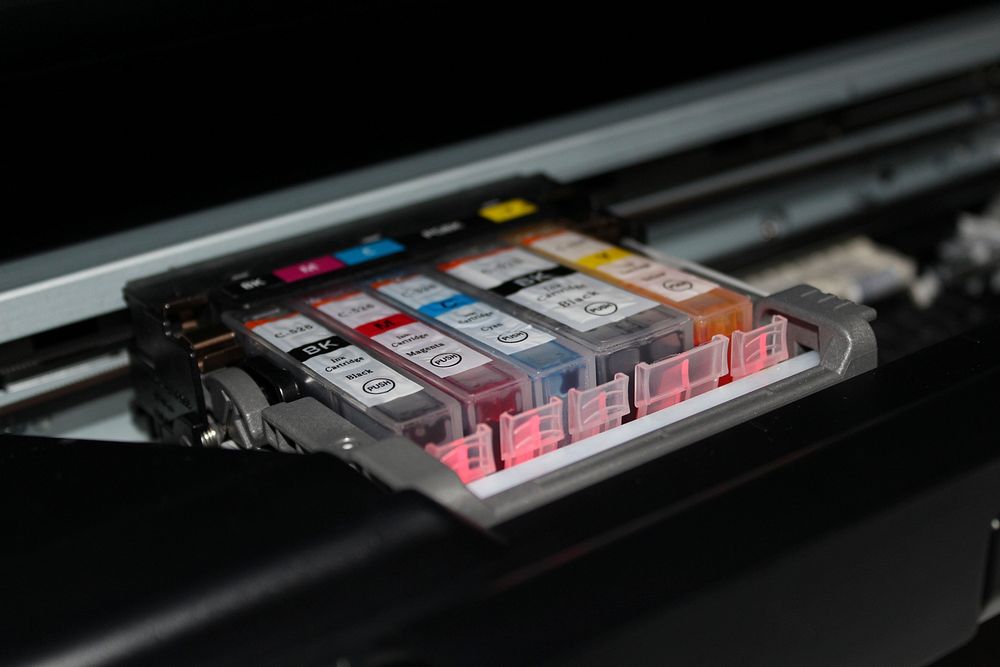
Take one standard tri-color cartridge. It typically runs $50 to $77 with a claimed yield of about 165 pages, so you land at roughly 30 to 45 cents per color page. A black cartridge at $25 to $35 for a few hundred pages lands in the 8 to 12 cent range, and cheap models do worse because they ship with half-size starter cartridges.
The yield on the box is a best case. Yields are measured under a standard test using light coverage, around 5 percent of the page. Print one full-color photo and you may get a fifth of the advertised number, which is why a cartridge that “prints 300 pages” dies after 80.
Two more things make ink feel expensive. First, some printers lock out color printing when a cartridge runs low. Second, ink is priced like a luxury good. Divide the price of a cartridge by the ink it holds and you get a median near $12,000 a gallon across genuine inkjet ink, with some high-yield black cartridges topping $34,000 a gallon. Nobody buys ink by the gallon. You pay per ounce without realizing it.
Compare cost per page: divide the cartridge price by the claimed yield.
When a laser wins, and when it doesn’t
A mono laser prints for roughly 3 to 4 cents a page with genuine toner. A color laser lands in the 8 to 20 cent range, sometimes competitive with an inkjet and rarely clearly better. Lasers have two advantages at home: toner does not dry out in the nozzle, so a printer unused for four months still prints, and they are quieter on long runs.
The break-even is arithmetic. If a laser costs $200 more upfront, and the inkjet runs at 10 cents a page while the laser runs at 3.5, the laser pays for itself after $200 divided by 6.5 cents, a bit over 3,000 pages. Print 3,000 pages and buy the laser.
Refillable tank printers sit in between: $250 to $500 upfront, one to three cents a page including color, beating a cartridge inkjet around 1,500 to 3,000 pages. They also carry a hidden repair, since the waste ink pad needs servicing after tens of thousands of pages.
The ink subscription trap
HP Instant Ink, Canon Ink Benefits, Epson Subscribe and Brother Refresh all work the same way. You buy a monthly page bundle, the printer bills you automatically, and the price per page is genuinely lower than buying cartridges if you use all of it. Some plans start near $2 a month for 10 pages. The trap is in the shape of the deal, not the headline rate.
- You pay for the bundle whether you used the pages or not. A light month still costs the full subscription.
- Overage rates are steep. Printing past your plan often adds a fee per ten pages, so one heavy month can erase months of savings.
- The terms let the company change the price, and price changes have been frequent.
- Credits roll and then expire, and cancelling mid-cycle can strand the balance.
So the subscription suits exactly one person: someone who prints a predictable, heavy volume every month and never has a spike. Before subscribing, write down your real monthly average for three months and multiply it by the plan price. If the plan costs more, you are paying for pages you never use.
Third-party ink and refills: where the real savings are
Third-party cartridges cost meaningfully less than the manufacturer’s version, and the discount widens on multipacks and during retailer sales. Genuine ink is calibrated to the printer, and some cartridges now include chips that make printers reject or misreport them. Some manufacturers also tie warranty claims to genuine supplies.
The practical rule: use third-party ink for volume printing where a bad color shift ruins nothing, and keep genuine ink for photos and client work. If you want to halve the cost rather than shave 20 to 40 percent off, a refill service that reuses your cartridge shell with new ink does it, at the cost of less consistent quality and leak risk.
Five moves that cut your print bill without buying anything
- Stop printing what you can stop. “I need to print this” usually means “I need to file this.” Scan it, sign it electronically, or keep it as a PDF.
- Print drafts in black and white, and get photos printed at a lab or online service. Color pages are where most people quietly lose money.
- Use draft or economy mode for internal copies. It trims ink noticeably on an inkjet and toner on a laser.
- Compare per-page prices, not cartridge prices. A $70 cartridge yielding 600 pages beats a $35 cartridge yielding 150.
- Buy ink where it is cheapest. Warehouse clubs often beat the manufacturer’s store, and a subscription plan is rarely the cheapest per page.
Five questions to ask before you buy
- How many pages a month, in black and white, and in color? Use your print history, not a guess.
- What is the cost per page of that exact model, at the price you will actually pay?
- Is it a subscription model, and does it print at all if you cancel?
- Does it sit unused for months? Then skip the cheapest model with a printhead that dries out.
- Do you need scanning and copying, or just printing?
The cheapest printer is not the one with the lowest price tag. It is the one where the hardware plus three years of ink costs less than a print shop would have charged. For most households, that means a decent inkjet with genuine ink bought by the multipack, and a laser or tank model only past a thousand pages a year.
Image: Rawpixel, CC0 1.0 (public domain).