The Real Problem: Most People Buy the Wrong Generator Twice
When the first ice storm of the season knocks out power for four days, the local hardware stores sell out of portable generators within hours. The people who grabbed the cheapest 3,000-watt open-frame unit on the way home usually end up back at the store the next morning, frustrated, because it either won’t run their furnace, won’t run their fridge at the same time as their well pump, or quietly damaged a control board on the first surge. The people who bought an 8,000-watt dual-fuel inverter and a properly sized inlet box for $1,200 more are still drinking coffee two days into the outage.
That gap between a “good deal” and a generator that actually keeps your family warm comes down to a few decisions most buyers never make on purpose. Here is the math the stores do not walk you through.
Step 1: Figure Out What You Actually Need to Run
Walk through your house with a piece of paper and write down only the things you cannot live without for 72 hours. For most people, that list is:
- Fridge and freezer
- Gas furnace or boiler (just the blower, not the whole system — usually 600 to 1,200 watts running, more on startup)
- Sump pump if you have one (high startup surge)
- Well pump if you are on a well (very high surge, often three times the running wattage)
- Internet router, phone chargers, one or two lamps
- One space heater or a window AC unit if you live somewhere that gets dangerous without power
Add the running watts together, then add the single highest startup surge. That number is your real minimum, not the wishlist in the showroom. A 5,000-watt unit that covers your fridge, furnace blower, router, and a few lights is plenty for most households. A 3,000-watt “home backup” unit almost never is, because the math only works if you never run two appliances at once.
Step 2: Inverter or Conventional — This Matters More Than Brand
Conventional generators are louder, heavier, and produce “dirty” power with more frequency variation. That is fine for old appliances and incandescent bulbs. It is not fine for modern electronics, furnace control boards, fridge inverter compressors, or anything with a sensitive power supply. If your refrigerator was made in the last ten years, running it on a cheap conventional generator can quietly damage the compressor over time.
Inverter generators cost about 30 to 50 percent more for the same wattage but produce clean power that is safe for laptops, phones, modern appliances, and anything with a circuit board. They are also 40 to 60 percent quieter at full load, which matters when you are running one all night in a neighborhood. For anything under 8,000 watts, the right answer is almost always an inverter.
Step 3: Fuel Choice Quietly Drives Your Real Cost
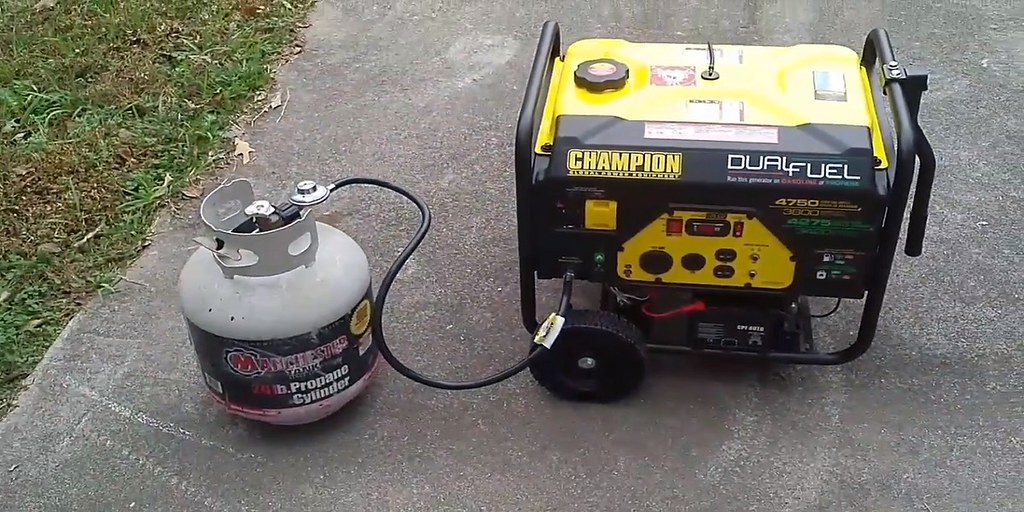
Gasoline-only generators are the cheapest to buy and the most expensive to live with. Gas goes bad in 30 to 90 days unless you stabilize it. During a multi-day outage, gas stations may be closed or simply empty. Propane stores indefinitely. Dual-fuel units that run on either fuel cost slightly more up front and pay for themselves the first extended outage.
Tri-fuel (gasoline, propane, natural gas) is the cleanest answer if your house already has a natural gas line. A natural gas hookup means you can run indefinitely with no refueling trips and no fuel storage. The catch: a natural gas hookup adds another $200 to $400 in parts and usually requires the generator to derate by 10 to 20 percent on natural gas compared to propane. For a one-off storm it is overkill. For frequent outages it is the best long-term answer.
Step 4: Portable vs Whole-Home Standby — The Real Cost Gap
A whole-home standby generator (Generac, Kohler, Champion, Briggs & Stratton) is a permanently installed unit that turns on automatically within 10 to 30 seconds of an outage. Real installed cost, after the generator, transfer switch, gas line, electrical work, and concrete pad: $9,000 to $18,000 for a 16 to 22 kW unit that covers a typical house. That is the right answer if you lose power more than twice a year, someone in the home depends on medical equipment, you work from home and cannot afford downtime, or your house has well water plus a sump pump.
A portable generator with a manual transfer switch or interlock kit costs $1,000 to $3,000 for the generator plus $300 to $900 for the electrical work. It requires you to wheel it out, hook it up, start it, and manage loads yourself. For most people who lose power a couple of times a year, the portable is the right answer. You keep the $10,000 in your emergency fund and tolerate the inconvenience of pulling it out of the garage.
Step 5: The Transfer Switch Trap Everyone Hits
You cannot legally or safely backfeed your house through a dryer outlet. The people who do it kill linemen who think the line is dead. The right answer is one of three things, in order of cost:
- An interlock kit on your existing panel ($50 to $150 in parts, installed by an electrician in one to two hours). Legal, cheap, works with any portable generator.
- A manual transfer switch ($300 to $900 installed). Cleaner, labeled circuits, easier for a non-technical spouse to use.
- A whole-home automatic transfer switch — only relevant if you are buying a standby unit.
Whatever you buy, hire a licensed electrician to do the panel work. The cost is small, the safety margin is large, and your homeowner’s insurance can deny a fire claim if the install was not permitted and inspected.
What Retailers Hope You Do Not Do
Big-box stores make real money on extended warranties, “starter kits” with overpriced propane hoses, and the wrong size unit. Before you buy:
- Look up the actual output at altitude if you live above 2,000 feet — most generators derate 3 to 4 percent per 1,000 feet.
- Buy a 240V-capable unit if you want to run a well pump or window AC; most cheap 120V-only units cannot.
- Skip the extended warranty. Generator failures happen in the first 30 days or not for years.
- Budget $100 to $200 for a real carbon monoxide detector and a weatherproof enclosure or running spot at least 20 feet from any window, door, or vent.
Done right, a portable inverter setup that covers the realistic essentials costs $1,500 to $2,500 all-in and keeps your family safe through a week-long grid failure. Done wrong, the great deal at the big box store costs about the same and does not run what you actually need it to run.
Image credit: “Propane Generator – Champion 3800-Watt Dual Fuel RV Ready Portable Generator” by QuietHut via Flickr, licensed CC BY 2.0.